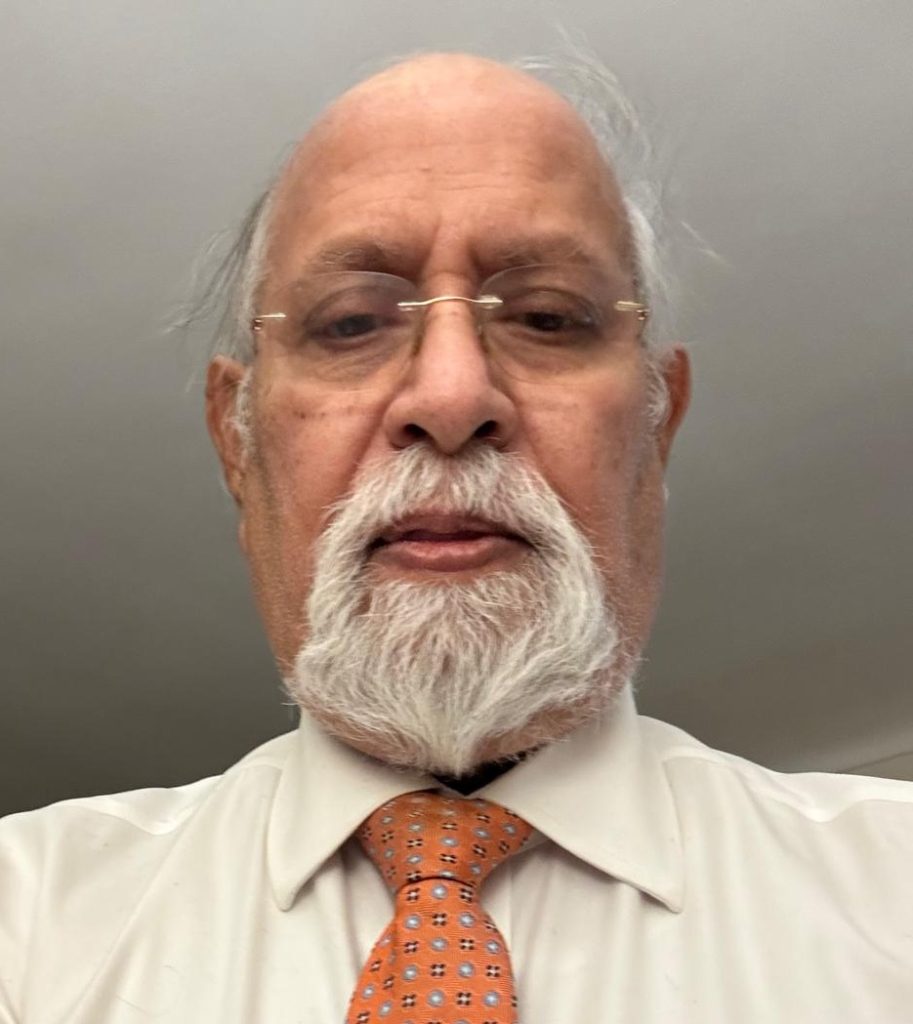
Professor Dr. A.K. Abdul Momen Since the interim government assumed power in August 2024, Bangladesh has entered a period of systemic collapse across human rights, rule of law, democratic governance and economic performance. This is no longer a series of isolated incidents — it reflects systemic institutional collapse and a growing climate of fear, intimidation and impunity.
Evidence from the United Nations, national human rights organisations, and national and international media shows:
1. Collapse of rule of law
2. Silencing of media and persecution of journalists
3. Collapse of the economy
4. Normalisation of mob violence and promotion of radicals
5. Mass killings and arbitrary detention
6. Explosive growth in mob violence
7. Systematic repression of opposition: namely, AL supporters, pro-liberation activists and Hindus
8. Persecution of minorities, including Hindus, Christians, Ahmadiyya, etc.
9. Destruction of state institutions in the name of “reform”
10. Killing of police personnel
11. Restriction of electoral participation to a “chosen” political group
12. Nationwide rise of jihadist groups and release of convicted terrorists
13. Plans to eliminate democracy through a so-called referendum
14. Looting and vandalism of several hundred thousand homes and businesses
15. Politicisation of the judiciary
16. Radical Islamic Resurgence and widespread Jihadi terrorist activities
17. Widespread sexual violence, including against children
18. Custodial deaths and extrajudicial killings
19. Destruction of cultural centres and organisations
20. Spread of lies, venomous propaganda, and wild accusations even by government agencies.
This is not a transitional phase. It reflects structural impunity and democratic breakdown, requiring urgent international oversight and conditional engagement.
1. Targeted Killings/Detention Of Awami League Supporters
• 537 AL leaders/activists killed
• 3,59,789 AL supporters arrested (Aug 2024–May 2025)
• 124 Members of Parliament, including 15 women, detained
The Awami League’s activities were banned through executive orders in May 2025. Opposition politics has effectively been criminalised. Reportedly, 18,700 false caseswere filed against AL, involving nearly 300,000 AL supporters, of which 4,017 are murder cases.
2.Mob Violence: Collapse Of Rule Of Law
Mob justice has become normalised, indicating a functional breakdown of state authority.
(a) According to Ain o Salish Kendra (ASK), a human rights organisation:
• 197 people were killed by mob violence in 2025, up from 128 in 2024
• Killings involved public lynching, prolonged beatings, and burning
• Ineffective police intervention and prosecution remain rare
• Over half a million AL supporters have been detained without bail, and many were killed extra judiciously, even inside jails.
(b) According to global human rights organisations:
• 637 people killed in mob lynching (Aug 2024–July 2025)
• 86 custodial extrajudicial killings (Sept 2024–Jan 2026)
• 42 AL detainees died in prison
One AL supporter who refused to pay extortion money was killed by stoning, as in medieval times.
3. Communal Attacks & Religious Hatred
Hindu communities have been disproportionately targeted, and the state has failed to provide equal protection under the law. International reporting and minority rights monitoring show that since August 2024:
• 2,000+ communal violence incidents immediately after the 2024 upheaval
• 174 verified incidents (Aug–Dec 2024), including 23 killings, 9 rapes
• 1,068 Minority establishments looted, vandalised or taken over (TIB)
• Widespread arson, destruction of temples, shrines, graveyards and forced displacement.
• 182+ minorities killed, including indigenous persons
• 2,796 documented incidents of minority persecution
• 58 minority women raped; 700+ subjected to sexual violence
• 17 Churches burned (Christmas 2024)
• Threats issued to churches in 2025
In Chittagong Hill Tracts: 103 violations, including 49 arbitrary arrests and 300+ acres of indigenous land seized. One Hindu garment worker was burned alive, as in medieval times.
4. Sexual Violence & Rape Of Women And Children
Credible Trends
• Rights-based reporting in 2025 indicates a sharp rise in rape, almost 400%, and sexual violence of girls and children
• 12,726 cases of violence against women
• 4,105 rape cases (Sept 2024–June 2025)
• Human Rights analysis further reported:
• 68% increase in rape cases in the first seven months of 2025
• 38% increase in violence against children (year-on-year)
• Minority rights documentation confirms rape used as part of communal violence, particularly against Hindu women and girls.
5.Governance Failure
Authorities reported:
• 44 police officers, 2 Ansars, 1 BGB officer killed
• 182 police officers are missing
• 464 police stations attacked, looted, vandalised or burned.
But reportedly 3,200 police men and women were butchered by jihadis between July 16 and 8 August 8.
Serious credibility loss of the Government and also the OHCHR
As per credible reports, a total of 657 died during July 16 to August 8, 2024 (by police and private sharpshooters), of which 329 died between July 16 and August 5 (day of Sheikh Hasina’s downfall) and 328 died between August 5 and August 8 totaling 657 deaths. The UN preliminary report estimated 650 deaths.
Dr. Yunus’ Health Ministry reported 834 deaths during July 16 and August 15. This includes 52 deaths due to traffic accidents, normal deaths, deaths due to heart attacks, snake bites, etc. Another 21 reappeared as “alive,” not dead.
However, once the UN Human Rights High Commissioner Volker Turk met Yunus, he accepted the interim government’s narrative of 1,500 deaths.
It may be mentioned here that (1) during the Syrian uprising, it was reported that 1,400 died due to deadly Syringe chemical gas. (2) In the case of Libya, it was estimated that 1,400 deaths occurred in the Abu Salim prison riot and in Israel on October 7, 2023, it was initially reported that 1,500 deaths and later corrected as 1,219 died (including 46 Americans) plus 230 kidnapped by Hamas.
It is possible that Dr. Yunus had 1,500 in his head, and his friend Volker Turk. without any credible evidence, accepted his Nobel Laureate friend’s false narrative and thus, he first (1) undermined the credibility of the UN report and secondly, (2) he did an injustice to those young boys and girls who actually sacrificed their lives during the July uprising. Since the Yunus government announced lucrative multiple benefits to the victims of the July uprising, numbers shoot up dramatically to enjoy the benefits. The UN and Mr. Volker Turk should correctly and fully investigate the total deaths during the uprising and apologise to the nation for false reporting.
The government issued Indemnity to the killers from July 1 to August 8, 2024. The killers and arsonists cannot be sued in any court by victims or victims’ families, and police are instructed not to entertain any cases against the killers.
Bangladesh lacks a transparent, audited national reporting system for sexual violence:
• No age-disaggregated public data
• No reliable case-outcome tracking
• Inadequate survivor protection
Result: under-reporting, intimidation of victims, and impunity.
6. Assault On Media And Freedom Of Speech
• 184 journalists’ accreditation revoked
• 354 journalists implicated in cases widely described as fabricated
• 18 arrested on false murder charges
• 523 incidents of journalist persecution
Media offices have been ransacked, burned down, editors and reporters attacked and assaulted, and female journalists harassed, severely undermining press freedom.
7. Education, Youth & Economic Instability
Since August 2024:
• Repeated school and college closures
• Textbook delays and disrupted examinations
• Teacher strikes and administrative paralysis
• 45 university teachers dismissed; 200 suspended
• 2,000 faculty sanctioned
• 2,500 teachers attacked
• 100 charged in alleged false cases
• 2,00,000+ students affected through expulsion, denial of exams, or harassment
• Beyond academia, 700+ lawyers and professionals face cases widely seen as politically motivated.
Impact:
• A lost academic year for thousands of students
• Quality of education sharply deteriorated
• Respect for education and learning was wiped out
• Rising youth frustration and anger
• Increased vulnerability to mob mobilisation and radicalisation
Economic consequences include weak investor confidence and supply-chain disruption despite optimistic official projections.
8. Economy In Precarious Condition And Future Is Uncertain
The Bangladesh economy was one of the top three best-performing economies of the world prior to the downfall of Prime Minister Sheikh Hasina. It increased its GDP from $90 billion to $478 billion and is hoping to have a trillion-dollar economy by 2030, one of the top 25 economies of the world. It was aiming at hunger-free country by 2030 and a prosperous digital economy by 2041. All these hopes and dreams have gone since the change of the government in August 2024.
The UN termed Bangladesh a “model of economic development,” and the Wall Street Journal called it “a standard bearer of the South.”
It was an emerging economic tiger. It achieved an average 6.6% GDP growth rate for over 15 years, and it reduced poverty from 42% in 2006 to below 18% in 2023 and extreme poverty from 24% to 5.6%. But since 2024, its GDP growth rate reduced to 3.3%, nearly half, the lowest in three decades and its extreme poverty sharply increased to 9% and poverty to 25% now.
Its stock market collapsed, and its banking sector is on the verge of bankruptcy. As per international agencies, nearly 62.5 million people will face starvation due to ill governance, political uncertainty and lawlessness.
Bangladesh has three major sectors for its growth: RMG, agriculture and remittance. While the RMG and agriculture sectors are badly hit, the remittance sector is keeping the economy going.
In the meantime:
• 393 garment factories are shut down, and 50% factories will close down soon
• 3 million were laid off, of which 85% are women work force
• Per capita income sharply reduced, leading to challenges of managing daily needs
• Electricity and energy shortages are wild
• Unemployment sharply increased, and an additional 26.6 million were added to the roster
• Inflation is ranging between 8% and 12%
• Exports declined
• No new Investment both domestic and foreign
• No new job creation
9. Custodial Deaths & Extrajudicial Killings
• Nearly 179 deaths inside jails
• Rights organisations documented dozens of custodial deaths in 2025
• Pro-regime NGO Odhikar reported 40 extrajudicial killings between Aug 2024 and Sept 2025
• Killings are routinely labelled as “crossfire” or “encounters”
No independent investigative or prosecutorial framework exists.
10. Emblematic Atrocities Under The Interim Government
A. Public Lynching by University Students in Dhaka
A widely reported incident in Dhaka involved the public lynching of a mentally unstable young man, named Tofazzal Hossain, by Dhaka University students, mostly coordinators of the July movement:
• The victim was forced to eat
• He was beaten over a prolonged period
• The assault occurred in public
• The victim later died from his injuries
Why it matters:
This demonstrates the normalisation of mob brutality even among educated youth and the absence of immediate law-enforcement deterrence.
B. Lynching and Burning Alive of a Hindu Man by an Islamist Mob
Another incident involved the lynching and burning alive of a Hindu man, named Dipu Chandra Das, by a mob (Touhidi Janata) linked to Jamaat-e-Islami-aligned and radicalised Islamist elements:
• The victim was brutally assaulted
• He was set on fire while still alive
• The attack was driven by religious hatred and based on false allegations of blasphemy
• It occurred in public, without effective state protection.
Why it matters:
This was a deliberate act of communal terror, symbolising the existential insecurity faced by Hindu minorities.
11. Non-Credible Election & Democratic Collapse
Exclusion of the Major Political Party
Since August 2024, the interim authorities have pursued a political process that cannot be considered a credible democratic transition due to the systematic exclusion of Bangladesh’s largest political party, the Awami League.
Key facts:
The Awami League has historically:
• Secured the largest nationwide voter base
• The party that led the country’s War of Independence and many movements and revolutions since 1948.
Under the interim administration:
• Party leaders and activists have faced mass arrests and fraudulent murder charges
• Party offices have been attacked, shut down, or vandalised
• Political participation has been effectively criminalised
• Supporters have been targeted by mob violence and intimidation
• 2,95,000 houses of AL leaders and supporters have been looted, vandalised and burned down.
Result:
An election conducted without the participation of the country’s largest party is no democracy, and it cannot reflect the will of the electorate and amounts to de facto disenfranchisement of millions of voters. As per surveys, nearly 70% supports the AL party.
12. Critical Transparency Failures
There is no publicly available, audited national data on:
• Political detainees
• Prison and custodial deaths
• Nationwide rape statistics
• Weapons looted during unrest
• Economic damage from violence
This lack of transparency shields perpetrators and blocks accountability.
Recommendations
• Immediate restoration of civil liberties and the rule of law
• Independent, impartial investigations into all alleged human rights violations
• Free, fair, inclusive national elections under a neutral caretaker framework involving all political parties, and
• Immediate resignation of the Yunus government as it is highly partisan, vindictive and unfit to govern effectively and efficiently. It has abdicated itself of its responsibility of punishing the culprits and has given free rein to radical jihadis to run the administration.
13.Policy Requests to US Lawmakers, State Dept. Officials and Stakeholders
First, we thank the US government, as it decided not to send election observers to the upcoming sham election in Bangladesh on February 12. We also thank the UN for deciding not to send election observers to the doctored election.
We respectfully urge the United States to:
1. Support UN-led monitoring and follow-up investigations
2. Condition diplomatic, security, and economic engagement on:
• Ending mob violence
• Prosecuting communal and sexual crimes
• Publishing audited human-rights data
3. Demand independent investigations into:
• Rape and sexual violence (including children)
• Anti-Hindu attacks
• Custodial and extrajudicial killings
• Require minimum democratic benchmarks before recognising any election:
• Inclusion of major political parties. Alternatively, withdraw the bans on political parties
• Release of political detainees and journalists
• Withdraw all false cases against political activists and journalists
• Freedom of assembly and expression
• Credible international election observation
• Reject normalisation of impunity in the name of stability.
The Ending Message
Since August 2024, Bangladesh has suffered a severe human-rights and democratic collapse. UN findings confirm mass killings and arbitrary detention; rights groups report nearly 6,770 killed, of which 667 mob-killing deaths in 2025 alone; minority monitors document killings, rapes, and arson targeting Hindus; sexual violence against women and children has surged; and the largest political party has been excluded from the electoral process. This is not stability — it is systemic impunity. We urge US engagement grounded in accountability, inclusion, and the rule of law.
Prof. Dr. A.K. Abdul Momen: Former Foreign Minister of Bangladesh (2019-24) and Former Permanent Representative of Bangladesh to the UN (2009-15).
 English
  Bengali