On October 16, 2025, a Facebook post under the name “Tamanna Hatun” detonated across Bangladesh. The writer identified herself as the third wife of Mufti Mamunur Rashid Qasemee and levelled devastating accusations: continued rape after verbal divorce, forced pregnancy, coerced abortion, drug abuse by the mufti, nine marriages, and the operation of a “halal brothel” disguised as the Ideal Marriage Bureau (IMB).
Three weeks later, on November 6, Ekushey Television’s flagship investigative programme “21 er Chokh” broadcast an hour-long exposé that left the nation reeling. And on Sunday, November 23—barely ten weeks after Tamanna first spoke out—police raided Qasemee’s flat in Keraniganj and placed him under arrest.
A Dhaka court promptly remanded him to jail pending trial under the Women and Children Repression Prevention Act.
In his own livestreams, Qasemee had bragged openly: “Hand over your daughter at twelve… There is no problem.” He gloated to his father about the “pleasure” of wedding nights with very young girls and vowed to “change” up to a hundred women until he secured four ideal wives.
Neighbours in Keraniganj quoted him as offering higher payments for “fresher” girls.
Why are Yunus supporters welcoming women abusers with garlands?
Rise of Extremism: Yunus defends dropping music, PE teachers in primary schools
Jihadists wage war against ISKCON after police clear two Hindus of rape charges
Tamanna’s on-camera testimony was harrowing. Persuaded by relatives that a pious scholar wished to shoulder responsibility for her and her child, she discovered on her wedding night that Qasemee neither prayed nor abstained from intoxicants. Beatings followed. After a verbal divorce, he continued to force himself on her. When she became pregnant, his relatives held her down and forced abortion pills into her mouth. “I did not want to lose my baby,” she wept.
The mufti’s past is equally sordid. Classmates from Hathazari and Deoband madrasas described a student already addicted to drugs and serial illicit relationships—including affairs with his own cousins and a teacher’s wife.
His father, the respected Mufti Aminul Islam of Kushtia, appeared on camera disowning him: “His actions are beyond my knowledge and beyond my tolerance. I threw him out of the house.”
In Kushtia and later in Dhaka, a pattern emerged: marriages to vulnerable women, violence, extortion, swift divorce, and immediate pursuit of the next target. Local residents confirmed he had married a 13-year-old girl. Landlords evicted him for non-payment of rent and for turning rented premises into dens of vice.
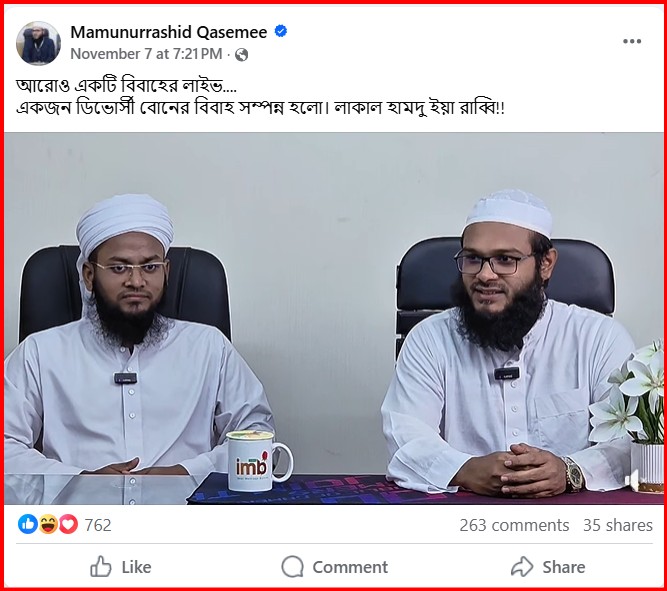
Qasemee sells bikes and cars from SBI Car Market and burqas from the online shop SBI Market and runs Taqwa Land Society, a land development business. He is also a director of Markazus Shareeya Al-Islamia, Bangladesh madrasa. He uses his official Facebook profile and pages for promotion.
All of this unfolded against the grim backdrop of the past 15 months. Since the bloody upheaval of August 2024, radical Islamist organisations have operated with near impunity. Public calls for jihad and full sharia enforcement fill the streets. Self-appointed morality squads—often shielded by elements within the security forces—have assaulted women for dress code “violations,” torched minority homes, and carried out extrajudicial punishments.
The torture and public humiliation of women have become disturbingly routine, justified by the same distorted religious rhetoric Qasemee weaponised for profit.
In this climate, the IMB was not an aberration; it was a commercialised microcosm of the broader assault on women’s bodily autonomy and dignity.
By cloaking predation in the language of polygamy and charity, Mufti Qasemee built a pipeline that delivered the poorest and youngest females to wealthy men willing to pay for “sharia-compliant” exploitation.
Tamanna Hatun’s defiance, Ekushey Television’s fearless journalism, and yesterday’s arrest have together delivered the first significant blow against this nexus of religious extremism and gendered violence. Yet the question hangs heavy in the air: how many more “marriage bureaus” and how many more self-appointed muftis continue to operate in the lengthening shadows cast since August last year?
For now, one predator is behind bars. But until the state confronts the ideology that bred him—and the patronage that protected him—countless other Tamannas remain at risk. The handcuffs on Mufti Qasemee are a beginning, not an end.
 Bengali
  English