As Bangladesh grapples with the fallout from the death of radical Islamist mob leader and an MP candidate from the Dhaka-8 seat, Sharif Osman Hadi, the nation has plunged deeper into turmoil. What began as mourning for the Inqilab Moncho spokesperson—shot on December 12 and succumbing to injuries in Singapore—has morphed into a wave of orchestrated violence, exposing the Yunus interim government’s perilous alliance with extremists.
Protests that erupted overnight on Thursday continued into Friday, with mobs targeting media outlets, the Bangabandhu Memorial Museum, cultural institutions, and Indian diplomatic installations.
This disgraceful escalation, marked by arson, vandalism, and anti-India hysteria, underscores a calculated push toward theocracy, as jihadist elements like Al-Qaeda-linked cleric Mufti Jasimuddin Rahmani and Maulana Ataur Rahman Bikrampuri seize the moment to advance their agenda. With elections slated for February 12, 2026, the international community watches in alarm as Yunus’s regime sacrifices stability to repay debts to the extremists who aided the August 2024 ouster of Sheikh Hasina’s Awami League.
Rahmani, other jihadist patrons want all ‘Islamic scholars’ freed from jail
Yunus’ jihadist mobs rampage newspaper offices, Dhanmondi-32
Students burn effigies of Pinaki, Elias for anti-liberation propaganda
Hadi’s death, amid allegations that his shooters fled to India, has been weaponised by radicals to stoke anti-India sentiments and justify mob rule. Witnesses and media reports confirm that hundreds took to Dhaka’s streets immediately after the news broke, rallying at Shahbagh—the epicentre of the 2013 pro-secular protests but now hijacked by Islamists.
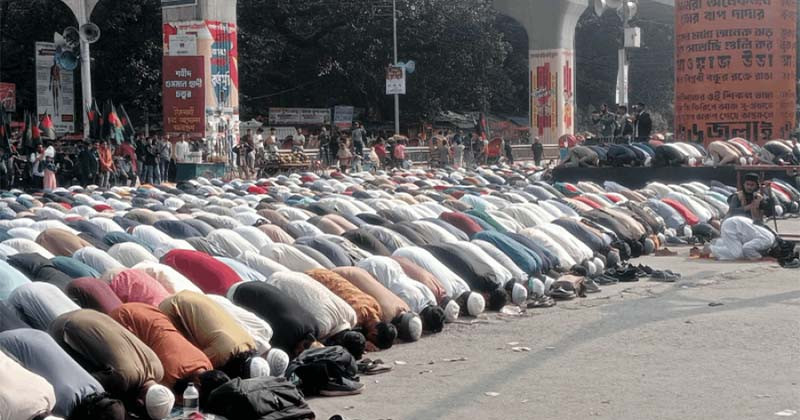
The Shahbagh rally on December 19 epitomised the regime’s moral bankruptcy. It happened after the overnight mob attacks that terrified the nation. Rahmani’s patron Mahmudur Rahman, the editor of daily Amar Desh, and associates Harun Izhar, Elias Hossain, Pinaki Bhattacharya, and razakar Ghulam Azam’s son Brig. Gen. Abdullahil Amaan Azmi instigated the attacks.
Thousands gathered for an “anti-hegemony” protest, ostensibly mourning Hadi but devolving into a venomous anti-India tirade laced with religious extremism. Organised by groups like DUCSU, Islami Chhatra Shibir (Jamaat-e-Islami’s student arm), and Islami Chhatra Andolan, the event saw protesters rename the intersection “Shahid Osman Hadi Chattar” and pledge unrelenting “struggle” until justice for Hadi.
Grameen’s Al-Qaeda ties and Yunus’ embrace of extremism and mobocracy
How Mufti Imran is revealing the danger of extremism on social media
CTTC being gutted as Yunus regime brands militants as Islamic scholars
The rally’s true horror lay in its leadership: Mufti Jasimuddin Rahmani, the Al-Qaeda ideologue released by Yunus in August 2024, led Jumma prayers. This terrorist, inspired by Anwar al-Awlaki and convicted for inciting blogger murders by his gang of jihadist killers (AQIS affiliate), had previously rallied with Jamaat-Shibir at Shahbagh on May 9, 2025, demanding an Awami League ban—which Yunus swiftly enacted.
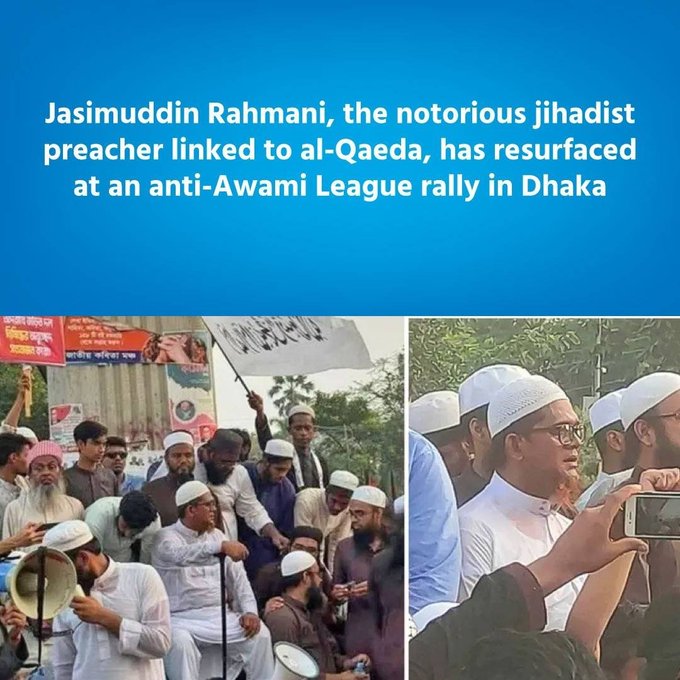
On Friday, his presence was a grotesque insult to jihadism’s victims, yet he was allowed to preach unchecked.
Flanking him was his follower, Maulana Ataur Rahman Bikrampuri, infamous for smear campaigns branding ISKCON as a “militant” Indian intelligence front, inciting anti-Hindu violence. Dozens of Jamaat-e-Islami and Shibir cadres joined, chanting “Naraye Takbir, Allahu Akbar,” “No more resistance—now revenge,” and “Agents of India, beware.” Speakers like Shibir’s Sadik Kayem, SM Farhad, and retired Lt. Col. Hasinur Rahman—a suspected ISI agent—vowed to eradicate “India-backed media” and politics, echoing National Citizen Party (NCP) figures Nahid Islam, Hasnat Abdullah, Sarjis Alam, and ex-adviser Mahfuj Alam. These NCP leaders have threatened to support separatists in India’s Northeast to force Hasina’s extradition, aligning with Yunus’s warnings since last year.
Interview With HT: Yunus is sponsoring extremists, says Sheikh Hasina
LeT’s Ibtisam Elahi Zaheer visits Dhaka, border districts, raising terror alert
This unholy alliance is deliberate: Yunus owes his power to radicals who fueled the 2024 riots and now patrol as Touhidi Janata vigilantes—linked to Hefazat-e-Islam and banned militants. Releasing Rahmani, unbanning Jamaat, and tolerating Bikrampuri’s hate speech betrays Bangladesh’s secular roots, forged in the 1971 Liberation War.
The 22-hour blockade ended Friday evening, but a massive janaza procession was planned for Saturday at the National Parliament’s south plaza, raising fears of further clashes. As of December 20, sit-ins persist at Shahbagh, demanding Hadi’s “killers” (blamed on Awami League and India) be punished, while radicals exploit the chaos to distort history—claiming Jamaat fought Pakistan in 1971 and India killed intellectuals.
Touhidi Janata’s Rampage: Arson and Vandalism at Cultural Institutions
Touhidi Janata mobs, chanting religious slogans, have unleashed fury on secular symbols. On the evening of December 19, Udichi Shilpigoshthi’s Dhaka office on Topkhana Road was vandalised and set ablaze—part of a pattern targeting progressive culture. Acting Secretary Amit Ranjan Dey called it deliberate, linking it to prior attacks. Fire services doused the flames by 8:15pm, but damage details remain unclear. An NCP delegation visited, but Yunus’s silence on cultural assaults draws ire.
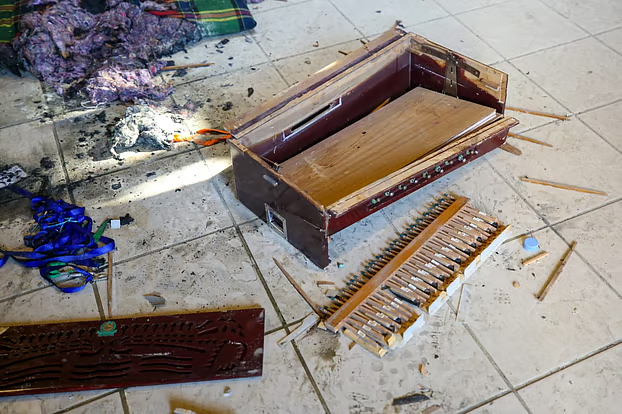
The night before, mobs stormed Chhayanaut in Dhanmondi, a 1961-founded beacon of Bengali arts famed for Pohela Boishakh events. The six-story building suffered total vandalism: classrooms gutted, CCTV smashed, computers looted, and musical instruments—harmoniums, tablas, sitars—destroyed in ideological rage against “un-Islamic” culture. Vice President Partha Tanvir Naved described the midnight raid as coordinated; General Secretary Laisa Ahmad Lisa affirmed resilience. Their statement grieved Hadi but decried exploitation by anti-cultural forces, demanding probes.
Civil society rallied Friday with human chains, where Dhaka University’s Prof. Samina Lutfa accused destabilisers of exploiting Hadi’s death, urging government action against lawlessness. Human rights activist Sara Hossain likened it to the 1971 atrocities by anti-secular forces.
Since August 2024, over 1,400 Liberation War monuments, museums (like Bangabandhu Memorial, torched multiple times), and libraries have been vandalised—attributed to Islamist opposition to secular icons.
Jihadist Mobs Torch Media Houses Amid State Inaction
Media bore the brunt: Touhidi Janata, incited by expatriate agitators like Pinaki Bhattacharya and Elias Hossain (tied to Yunus ally Mahmudur Rahman of Amar Desh), attacked Prothom Alo and Daily Star in Karwan Bazar. Journalists were trapped on roofs, pleading for help via Facebook; the army intervened briefly for evacuation but allowed resumed looting. Security as bystanders highlights complicity.
Prothom Alo’s old building (housing publications) was targeted; mobs also hit Bangabandhu Museum ruins (fourth attack since August) and India’s Assistant High Commissioner office in Chattogram. A Hindu man was lynched and burned on the Dhaka-Mymensingh Highway for alleged blasphemy, without interruption by forces. Chants of “Naraye Takbir” and al-Qaeda flags were rampant; Rahmani spewed anti-India vitriol at Shahbagh.
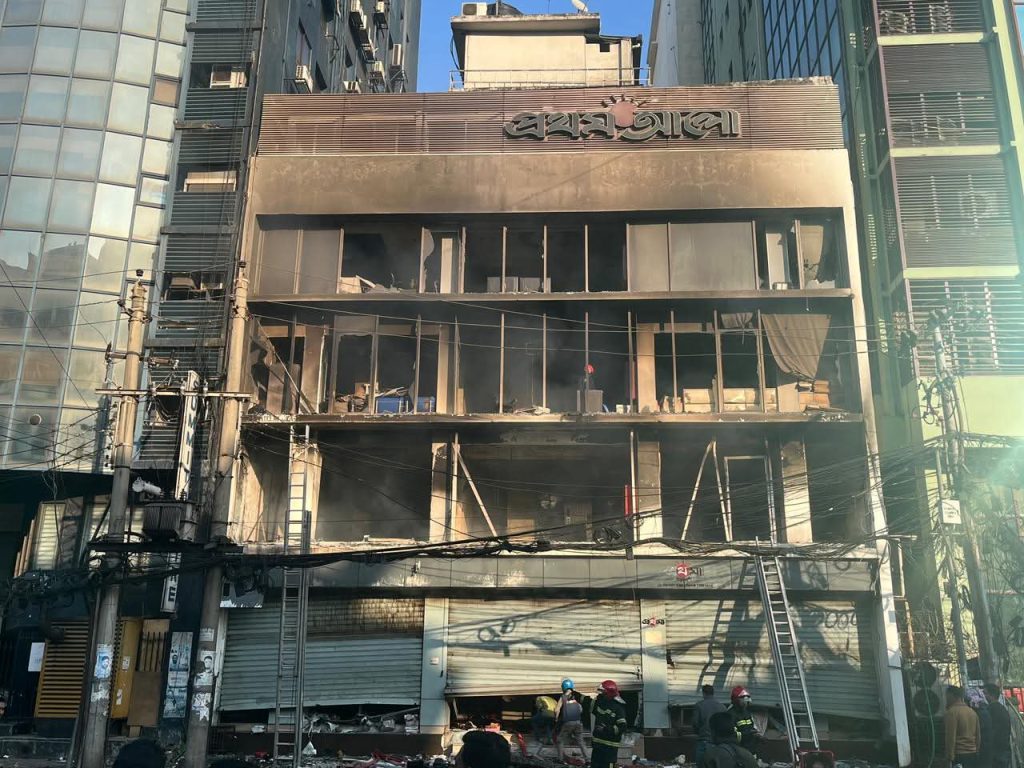
Journalist bodies erupted: DUJ’s Sazzad Alam Khan Tapu and Akhtar Hossain decried “unacceptable” insecurity; Media Freedom Coalition called it an assault on democracy; DCAB demanded swift justice, condemning ex-president Anis Alamgir’s arrest; OCAB urged credible probes. Overseas, Al Jazeera and The Times of India reported nationwide spread, with The Hindu noting election uncertainty.
Violence rippled outward: Prothom Alo offices in Kushtia (ransacked via CCTV-captured break-in), Khulna (signboards burned, demolition threats), and Sylhet (windows shattered) were hit on December 18-19. Attempts in Chattogram (armed mob dispersed), Bogura (thwarted by patrols), and Barishal (gate shoving) failed. Local journalists like Kushtia’s Touhidi Hasan and Khulna’s Hasan Himalaya condemned it, urging unity; police bolstered security.
Rahmani’s Ongoing Jihadist Demands
Rahmani’s influence persists: Released in August 2024 with an army escort, he threatened prison breaks at a September 2025 seminar for jailed militants, dubbed “Prophet’s lovers.” Joined by Hefazat’s Muhiuddin Rabbani, HuJI’s Mufti Harun Izhar, and officers like Hasinur Rahman (recruiting Rohingyas for jihad), they demanded releases, decrying democracy as “shirk.” Harun, an ISI-linked Shariah advocate, met advisers to push this, even proposing a mosque near Chandranath Temple—sparking outrage.
This state-backed extremism—denying militants exist while freeing them—fuels instability. Jamaat’s cow feast near the temple and history distortions (claiming India killed intellectuals) aim to erase 1971’s secular victory. Sheikh Hasina, from exile, lambasted the “Yunus-Jamaat clique” for demeaning Victory Day; the Home Adviser’s mass Awami arrests stir criticism.
 English
  Bengali