On December 20, in the heart of Victory Month, Bangladesh bid adieu to one of its most revered freedom fighters, Air Vice Marshal (Retd.) AK Khandker, Bir Uttam.
The deputy chief of staff of the Mukti Bahini and the nation’s first Air Force chief passed away at 10:35am due to age-related complications while undergoing treatment at the Combined Military Hospital (CMH) in Dhaka. He was 95.
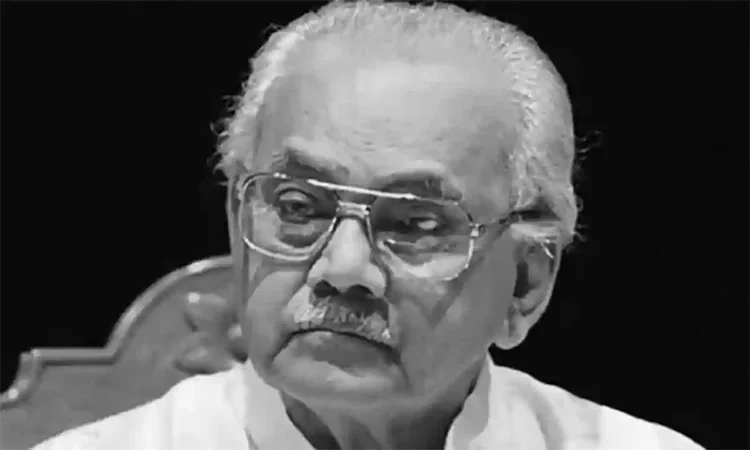
Born in 1930 in Rangpur (with ancestral roots in Pabna’s Bera upazila), Khandker joined the Pakistan Air Force in 1952 after completing his education. By 1971, as a group captain and second-in-command of the air base in Dhaka, he defied the Pakistani military crackdown.
Risking everything, he escaped with his family and fellow officers, crossing the border into India on May 15 to join the Liberation War.
Appointed deputy chief of staff under Commander-in-Chief Colonel MAG Osmani, Khandker played a pivotal role in organising the Mukti Bahini. He coordinated the historic “Kilo Flight” operations—the fledgling Bangladesh Air Force’s daring attacks in September 1971. On December 16, in Osmani’s absence, he represented the Mukti Bahini at the iconic surrender ceremony at Dhaka’s Race Course Maidan, witnessing Pakistani forces lay down arms before Allied Command leader General Jagjit Singh Aurora.
Post-independence, Khandker became Bangladesh’s first Air Force chief (1972–1975), rebuilding the war-ravaged force into a professional institution. An Air Force base is named after him in recognition. He later entered politics, serving as planning minister under HM Ershad and as an Awami League MP from Pabna-2 in 2008. For his gallantry, he received the Bir Uttam in 1973 and the Independence Award in 2011. His book *1971: Bhetore Baire* remains a key historical account of the war.
Inside the Liberation Struggle
In a poignant 2006 interview with Prothom Alo’s Sajjad Sharif—republished in tribute—Khandker shared vivid insights into the war’s early chaos and triumphs.
The Mukti Bahini emerged spontaneously after the March 25, 1971, crackdown, he recalled, as Bengali soldiers resisted for self-defense. Formal structure came on April 17 with the Mujibnagar government’s oath. Initial Indian aid was limited, but from May, training and arms flowed, escalating dramatically after the August 9 Indo-Soviet treaty. Monthly trainees rose from 2,000 to 20,000, boosting morale. Naval commandos struck days later, crippled Pakistani shipping and cracking their confidence.
Khandker emphasised unity: Rejecting proposals to limit recruitment to Awami League supporters, he insisted the war belonged to all patriots. “We had no right to exclude those risking their lives for the country,” he said. Coordination with India was clear—Bangladesh provided fighters, India training and logistics—fostering mutual respect despite minor frictions.
On challenges like the Mujib Bahini (a parallel force), he admitted integration efforts failed, causing occasional issues, though broader harmony prevailed. Indian generals held high regard for Mukti Bahini’s courage, noting how guerrillas rendered Pakistani forces “blind and deaf” in a people’s war supported by civilians.
Victory seemed inevitable by November, Khandker reflected, as refugees strained India and Mukti Bahini operations intensified. On surrender day, he rushed to Dhaka in casual attire. He described General Aurora’s deference and the overwhelming public joy: “Waves of people embracing us, crying—with hope and dreams in their eyes. An unforgettable feeling.”
Khandker is survived by two sons, a daughter, and grandchildren. His wife, Farida Khandker, predeceased him in June 2025. His janaza was held on December 21 after Zuhr prayers at BAF Base Bashar, followed by burial with full state honours.
In Victory Month, AK Khandker’s passing reminds us of the indomitable spirit that forged Bangladesh. His legacy endures in the skies he helped secure and the freedom he defended.
 Bengali
  English