The late-night detentions of journalist Mizanur Rahman Sohel and Mobile Business Community Bangladesh (MBCB) General Secretary Abu Saeed Piyas by Detective Branch (DB) of police on November 18 have ignited outrage, underscoring a pattern of arbitrary enforcement in the interim government under Nobel laureate Muhammad Yunus.
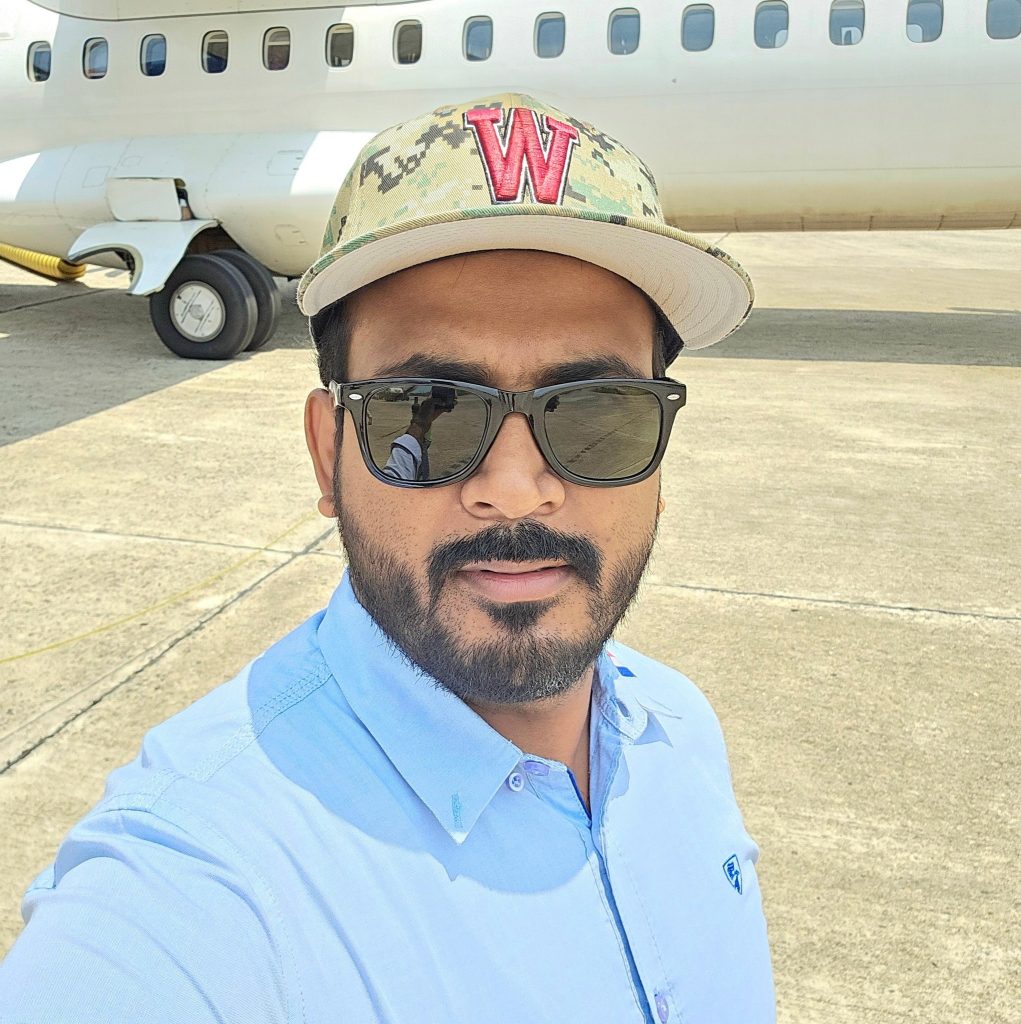

Sohel is the online chief of the daily Bhorer Kagoj and the general secretary of the Online Editors Alliance. He is the media consultant whose PR firm, Times PR, was organising MBCB’s anti-NEIR press conference.
These incidents, widely decried as unlawful abductions, exemplify the “mobocracy” and unchecked lawlessness that have plagued the country since August 2024, when Yunus assumed power. Critics from across the political spectrum, including human rights organisations and opposition figures, argue that such actions by security forces—often aligned with Yunus supporters—reflect systemic human rights violations, eroding public trust and fueling vigilantism.
A Pattern of Nocturnal Intimidation
The detentions occurred amid escalating tensions over the National Equipment Identity Register (NEIR), a government initiative to register mobile handsets by December 16, which MBCB opposes as a threat to 20,000 traders’ livelihoods. Both men were seized from their homes without prior notice, formal charges, or warrants, in operations that lasted into the early hours of 19 November—hallmarks of extrajudicial overreach.
-Mizanur Rahman Sohel’s Case: Around midnight on November 18, DB officers arrived unannounced at Sohel’s Dhaka residence, identifying themselves only as Detective Branch personnel. Sohel was told the DB chief wished to “speak” with him and that he would be returned shortly. No explanation was provided for the summons, nor any allegation cited.
Officers confiscated his mobile phone, entered his name in the detainees’ register, removed his shoes and belt, and placed him in a holding cell. He was held for approximately ten hours—until around 10am the next day—before being driven home without further questioning or documentation.
In interviews with BBC Bangla, Sohel described the ordeal as disorienting: “DB personnel arrived at night and informed me that the head of the Detective Branch wished to speak with me… I had no idea why or about what.” He later alleged on social media that the move was orchestrated to silence criticism of NEIR, implicating a special assistant to Yunus in a scheme to favour nine select traders over 25,000 others, including benefiting a “school friend.”
-Abu Saeed Piyas’s Case: Roughly an hour later, around 1am, Piyas was taken from his Mirpur home in a parallel operation. His wife informed journalists that DB officers provided no details, simply bundling him into a vehicle. Like Sohel, Piyas’s phone was seized, and he was processed into custody without stated cause.
About the reason behind the detention, DB chief Shafiqul Islam vaguely termed “specific queries” related to MBCB. Islam refused to disclose allegations, timelines for court production, or evidence, stating only, “There are certain queries” against the organisation, which he claimed authorities were unfamiliar with prior to the raid. Piyas’s seizure directly preceded MBCB’s nationwide shop shutdown announcement, which leaders framed as a demand for his release alongside NEIR reforms.
MBCB threatens to stop business
On Wednesday, the MBCB announced to close all mobile phone shops in the country in protest against the NEIR system to be implemented from December 16 to prevent the use of unregistered mobile phone handsets and ensure security in the telecommunications sector.
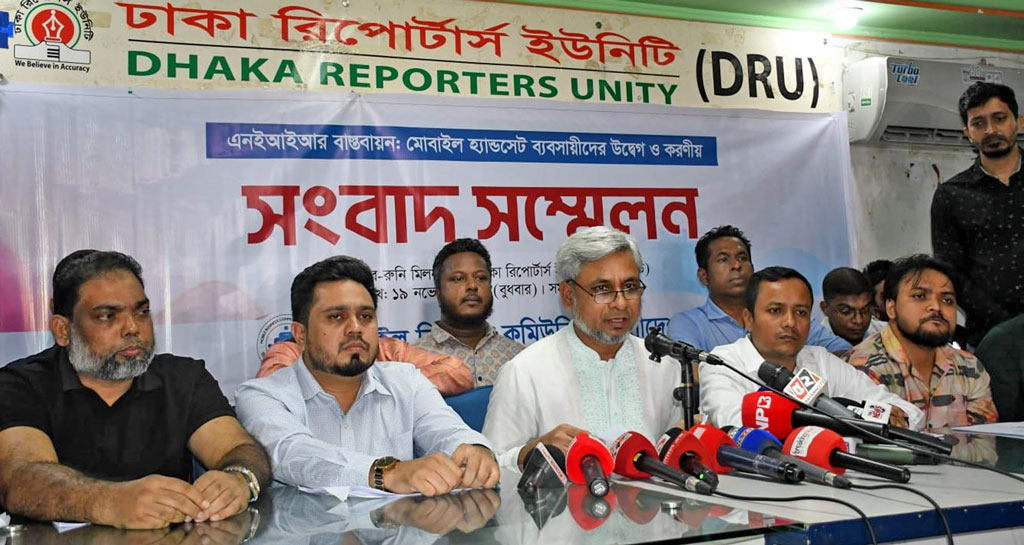
The mobile phone traders’ organisation made this announcement at a press conference organised at the Sagar-Runi auditorium of Dhaka Reporters Unity (DRU) in the capital.
MBCB Acting President Shamim Mollah said at the press conference that the organisation’s General Secretary Abu Sayeed Piyas has been taken to the DB office. If he is not released and the issue of implementing NEIR is not reconsidered, mobile phone sellers across the country will launch a strong movement.
Then they protested in front of the DB office. In such a context, Piyas was released around 6pm.
In a reaction after being released from the DB office, Piyas spoke to the media.
He said: “We only wanted to present our statement to the country and the nation. But this syndicate is so scared that a press conference could not be organised, which is why we were detained. However, the brave traders of our organisation have carried out the scheduled program. This is like a repeat of another July coup last year, where the students who led that movement were taken to the DB office.”
In response to the question of what their next program will be, Piyas said: “I am first going to meet my business colleagues in Karwan Bazar. This is a matter of everyone’s livelihood. Everyone’s backs are against the wall. So, we will take the next decision after discussing it with everyone.”
Unlawful Acts in Context
These actions contravene Bangladesh’s Constitution (Articles 31–33 on personal liberty and due process) and international standards under the International Covenant on Civil and Political Rights (ICCPR), which Yunus’s government has ratified. Late-night raids without judicial oversight, prolonged incommunicado detention, and absence of charges constitute arbitrary deprivation of liberty, per UN Working Group on Arbitrary Detention guidelines.
Legal experts, including those from the Bangladesh Legal Aid and Services Trust (BLAST), have called for immediate judicial review, warning of “echoes of enforced disappearances” from Hasina’s era—ironically, the very abuses Yunus vowed to end.
The abductions are not isolated but symptomatic of a broader collapse in the rule of law since August 2024. What began as a push against authoritarianism has morphed into “mobocracy”—rule by unchecked crowds and partisan enforcers—fueled by Yunus supporters (often student activists and Islamist-leaning groups) and complicit security forces.
Rights monitors document over 637 lynchings from August 2024 to July 2025, the deadliest extrajudicial wave in decades, with 70% targeting Awami League (AL) affiliates. Police, operating at 30% vacancy rates, have retreated from proactive enforcement, enabling vigilantism while selectively intimidating perceived foes.
DB and police raids mirror this impunity, with 92,486 arbitrary arrests (mostly AL-linked) from August–September 2024 alone, per HRW. Over 35 custody deaths of AL leaders since then involve alleged torture, with zero probes. The amended Anti-Terrorism Act (2025) has been weaponised against dissent, banning AL and enabling mass detentions.
UN reports highlight “brutal, systematic repression,” including point-blank shootings of protesters. In the Sohel-Piyas case, DB’s “misunderstanding” excuse—citing a press notice’s contact details—has been dismissed as pretextual, akin to 354 journalist harassments and 167 credential revocations under Yunus.
This environment of “reprisal violence” has spiked crimes: murders are up 25.9% (1,930 in H1 2025), and rapes are up 35.5% (4,200 cases), per police data. Critics like AL’s Mohammad Ali Arafat charge: “Since Yunus’s illegal seizure… near-daily human rights abuses [include] revenge killings… and arbitrary arrests targeting political opponents.”
Yunus Faces Serious Criticism for Human Rights Violations
Yunus, once hailed as a reformer, now confronts global backlash for perpetuating—rather than dismantling—repressive structures. HRW’s October 2025 letter urged its government to ensure fair International Crimes Tribunal (ICT) prosecutions, decrying “repeating the repressive tactics of its predecessor.”
Al Jazeera reported in November 2025 that “extrajudicial deaths mount under [Yunus],” with rights groups noting continued killings and disappearances. Amnesty International’s March 2025 brief slammed the Cyber Protection Ordinance for failing international standards and stifling expression.
DW highlighted December 2024 criticisms over impunity for 44 police deaths during protests, while The Tribune India quoted indigenous leader Suhas Chakma calling Yunus’s rule “an act of fraud” that misleads the world. The New Humanitarian’s November 2025 analysis questioned if “the revolution [was] worth it,” citing HRW on minority oppression and media suppression. CIVICUS noted July 2025 progress in releases but pitfalls in democratic reform.
Opposition voices amplify this: activists accuse Yunus of turning Bangladesh into a “dangerous factory of militant [rule], where justice… [is] destroyed every single day.” As MBCB’s shutdown spreads, they call for UN-led neutral probes and police reforms to halt the slide toward deeper instability.
 Bengali
  English