The Bangladesh Awami League has issued a poignant press release commemorating the 17th anniversary of the Pilkhana tragedy, the deadly 2009 mutiny in the Bangladesh Rifles (BDR) Headquarters that claimed 74 lives.
The statement, released on Tuesday—marking the date of the revolt’s outbreak—pays tribute to the martyrs while sharply criticising actions taken by the former interim government led by Muhammad Yunus.
The Pilkhana tragedy, also known as the BDR mutiny or Pilkhana massacre, unfolded on February 25–26, 2009, at the BDR’s Pilkhana headquarters in Dhaka. Mutineers killed 57 army officers (including then-BDR Director General Major General Shakil Ahmed) and 17 civilians while holding hostages amid demands and grievances. Several top leaders of the BNP-Jamaat and militant groups Hizb ut-Tahrir, JMB and HuJI-B were involved in the massacre as masterminds.
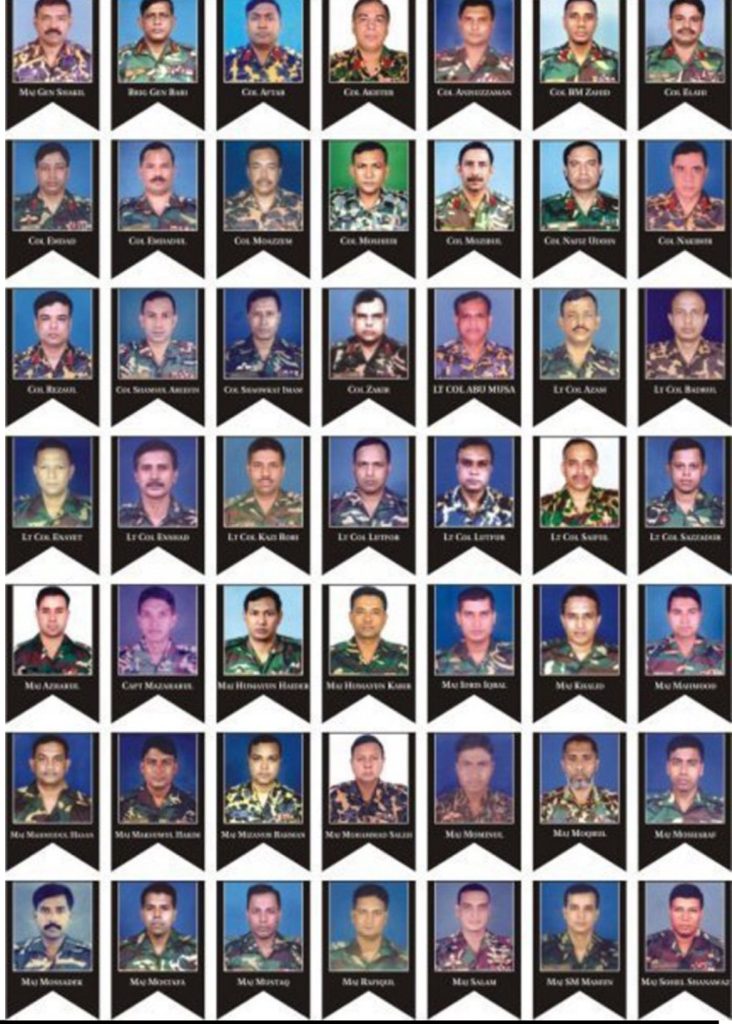
The Awami League, which had assumed power just weeks earlier after a decisive victory in the December 2008 elections, described the event as a “planned and brutal attack” intended to destabilise the new administration and provoke civil conflict. Under Prime Minister Sheikh Hasina’s leadership, negotiations led to the mutineers’ surrender, ending the crisis.
Civil society leaders condemn education minister for unconstitutional remarks
Neutrality questioned as BNP leaders appointed as administrators in six cities
ICT-BD: Prosecutor alleges corruption, bribery, and case manipulation by Tajul Islam
The party highlighted the subsequent judicial process as transparent and swift. In November 2013, a trial court sentenced 152 individuals to death, 160 to life imprisonment, and 256 to other terms. The High Court, in 2017, largely upheld these verdicts, confirming death sentences for 139, life terms for 185, and varied punishments for 228 others.
Beyond prosecution, the Awami League government provided support to victims’ families, including residential flats and financial benefits, as a gesture of solidarity—though the statement acknowledged that no measure could fully compensate for the losses.
The release expressed deep concern over decisions by the “recently departed interim administration” under Muhammad Yunus. It accused the government of releasing 293 convicted individuals linked to the mutiny, calling the action “unjust” and politically driven. The party also criticised calls for reinvestigation and the formation of a new inquiry committee as being motivated by politics rather than justice. It noted that a committee’s report remains unpublished, even as releases continued.
Awami League bins Yunus’ BDR mutiny report targeting Sheikh Hasina, India
Pilkhana Tragedy: Awami League remembers martyred army officers, family members
GCDG report recalls police killings, release of militants in July-August 2024
The Awami League condemned efforts to “undermine the judicial process” and shift blame onto the party, framing them as attempts to rewrite history and exploit the tragedy for political gain.
On this solemn occasion, the statement emphasised honouring the martyrs, praying for their souls, and extending sympathy to grieving families. It urged reliance on Bangladesh’s criminal justice system and an end to the “political exploitation” of the Pilkhana incident.
This remembrance comes amid ongoing debates over the 2009 events. A commission formed under the Yunus-led interim government (following Sheikh Hasina’s ouster in 2024) submitted a report in late 2025 alleging the mutiny was orchestrated with involvement from senior Awami League figures—claims the party has rejected as fabricated and malicious. The Awami League’s statement reaffirms its narrative of decisive leadership in crisis and commitment to justice, while positioning recent developments as erosions of accountability for the martyrs’ sacrifice.
 English
  Bengali