In yet another heartless display of the Yunus regime’s repressive machinery, an Awami League supporter languishing in Kishoreganj District Jail was denied parole to attend his father’s funeral, forcing authorities to drag the elderly man’s body to the prison gate for a final, agonising glimpse.
This barbaric act underscores the interim government’s systematic persecution of former ruling party affiliates, where even basic human decency is sacrificed on the altar of political revenge.
Milon Mia, 45, a resident of Panaullarchar in Bhairab Upazila, Kishoreganj, has been rotting in jail since December 2024 on charges tied to an alleged attack during the anti-discrimination student movement.
Despite securing bail in that case, he was promptly rearrested under the draconian Special Powers Act—a favourite tool of Yunus’ Jamaat-backed thugs to keep political opponents locked away indefinitely. Relatives insist Milon holds no official position in the Awami League, branding his detention as a pure vendetta.
Milon’s father, Ful Mia, 70, battled cancer for years before succumbing on Tuesday at a private hospital in Bhairab. The family pleaded with the district magistrate for parole so Milon could join the janaza and bid a proper farewell. The request was callously rejected, with orders instead to haul the corpse 60 kilometres to the jail gate.
On Wednesday afternoon, at the prison entrance, Milon collapsed in sobs as he viewed his father’s lifeless body through the bars— a scene of raw grief engineered by bureaucratic cruelty.
Out on bail, Saddam accuses Bagerhat jailer of demanding bribe
Jungle Rule: MSF reveals alarming rise in custodial deaths, lynching
Bangladesh’s Valley Of Death: 643 unclaimed bodies amid Yunus-led mobocracy
Milon’s uncle, Motiur Rahman, vented his fury: “We tried everything for parole, but it failed. We had to bring the body to the jail. Milon broke down crying. He held no post in the Awami League—this is sheer injustice. We rushed from the courts to the prison instead of performing the last rites. Sixty kilometres away, while the body awaited burial.”
Defense lawyer Abdul Momen Bhuiyan slammed the farce: “There are no specific allegations against Milon. After being bailed in one case, they slapped him with another under the Special Powers Act. He’s not named in any FIR—just a matter of police suspicion. This is targeted harassment.”
Kishoreganj Jail Superintendent Ritesh Chakma coldly confirmed the procedure followed district magistrate orders, allowing only a gate-side viewing. No compassion, no humanity—just regime protocol.
Saddam’s Heartbreak
This isn’t an isolated atrocity—it’s part of Yunus’ broader campaign to crush Awami League voices through fabricated cases, denied bail, and denied humanity.
Take Jewel Hasan, alias Saddam, former president of the banned Bangladesh Chhatra League’s Bagerhat Sadar upazila unit. In January 2026, his wife Kaniz Suborna, 22, and their 9-month-old son Sejad Hasan (Nazif) died tragically at home amid the crushing stress of his imprisonment. Family and rights groups begged for parole so Saddam could attend the funeral—a basic right under constitutional provisions and international standards.
Sajeeb Wazed Joy warns of Islamist takeover, urges international intervention
Narsingdi Awami League activist slaughtered under Yunus regime’s reign of terror
Custodial Death: Elderly Awami League leader Abdur Rahman dies in Chittagong
The regime refused. Instead, the bodies were brought to Jashore Central Jail gate on January 24, where Saddam was granted a mere five-minute supervised farewell. Viral images of his devastation ignited nationwide outrage, with human rights bodies like Ain o Salish Kendra (ASK) condemning it as “inhuman and unconstitutional,” violating Articles 27, 31, and 35(5) of the Constitution and ICCPR norms.
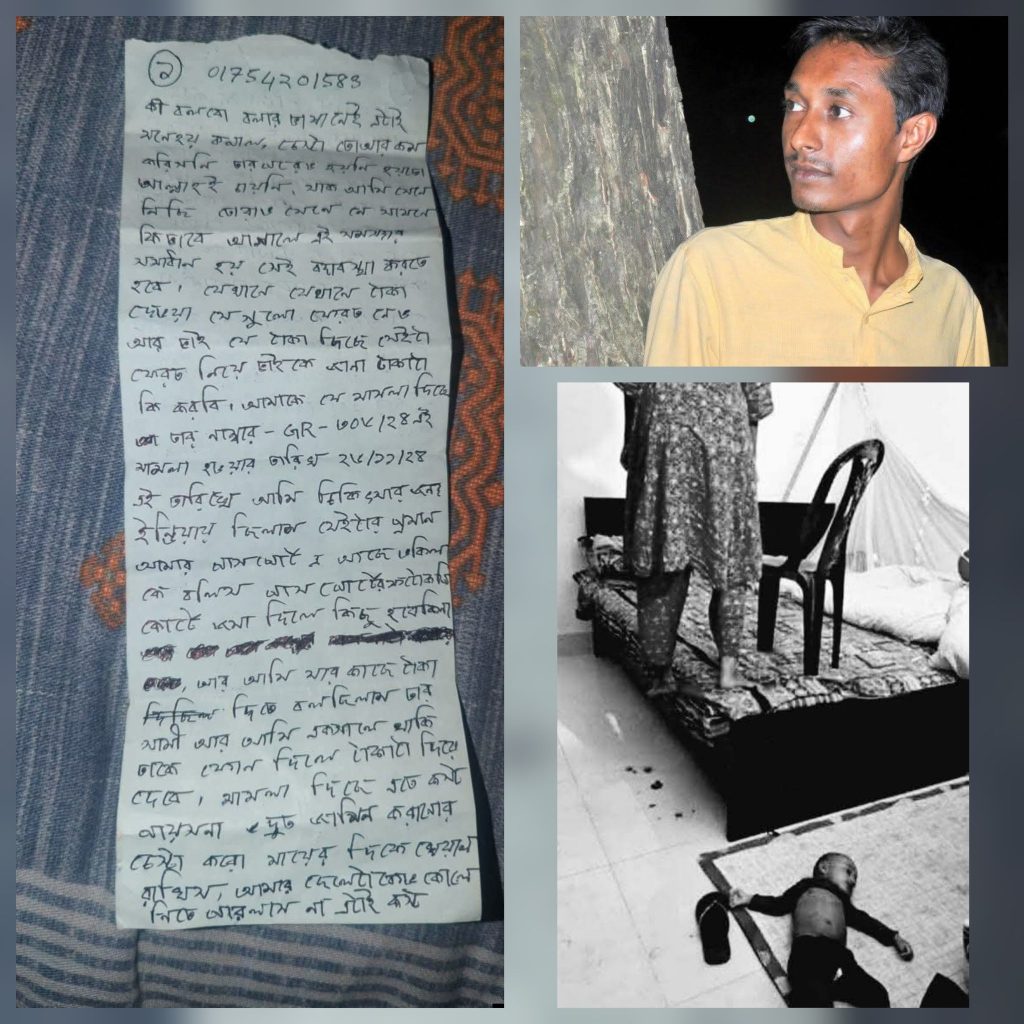
Even after public backlash forced the High Court to grant six-month interim bail on humanitarian grounds (January 26), Saddam alleged corruption from Bagerhat District Jail Superintendent Khondaker Md Al-Mamun, claiming a Tk5 lakh bribe demand to avoid transfer to distant Jashore. Saddam described months of harsh solitary confinement as a “cell prisoner” for alleged infractions—claims the superintendent dismissed as “baseless propaganda” tied to “aggressive behaviour.”
Saddam, now out, visited the graves in Sabekdanga village, declaring himself an “innocent political prisoner” tormented by the regime’s vendetta. His case mirrors Milon’s: repeated bail denials, rearrests on flimsy grounds, and denial of family tragedies’ solace.
These parallel horrors—fathers’ corpses at jail gates, wives and infants lost without farewell—expose Yunus’ interim rule as a merciless vendetta against Awami League supporters. With sham elections looming, the regime weaponises prisons to break spirits, foster impunity for its Islamist allies, and silence dissent. Families grieve not just losses, but a government that treats human suffering as collateral in its power grab.
The pattern is clear: Under Yunus and Jamaat’s shadow, justice is denied, humanity withheld, and Awami League affiliates are punished with calculated cruelty. How many more broken families before the world demands accountability?
 Bengali
  English