Three journalists have been brutally attacked while attempting to document illegal sand lifting operations in the North Harbang area of Chakaria upazila, Cox’s Bazar district, the constituency of Home Minister Salahuddin Ahmed.
The assault, which occurred around 4:30pm on Sunday, left the reporters with severe injuries and once again exposed the dangerous culture of violence and intimidation that journalists in Bangladesh increasingly face when fulfilling their duty to expose wrongdoing.
The victims are Choton Kanti Nath, Chakaria correspondent for Kaler Kantho and Dainik Azadi; Iqbal Faruk, correspondent for Amar Desh and Dainik Purbadesh; and M. Jiabul Haque, correspondent for Dainik Sangbad and Suprobhat Bangladesh.
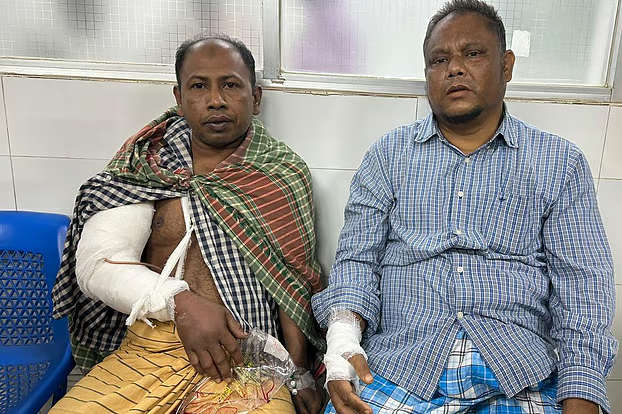
According to their accounts, they arrived at the site after receiving reports of unauthorised sand extraction from a local stream. As they began recording photos and videos, workers at the scene raised an alarm. A man named Nazim Uddin, whom the reporters allege was directing the illegal operations, arrived and reportedly shouted, “Bury all these bastards in the ground,” inciting the workers to attack.
BNP leader sued in Panchagarh for extortion demand
Silica Sand Looting: High Court wants names of culprits in Habiganj
Extortion: Outrage erupts as BNP thugs ramp up terror in Mymensingh
The assailants first snatched the journalists’ mobile phones and threw them into the stream. They then surrounded the three men and launched a savage beating with fists, kicks, and sharp weapons. Choton Kanti Nath suffered a head injury that caused bleeding, Jiabul Haque’s right arm bone was fractured after he was thrown into the water, and Iqbal Faruk’s palm was slashed open by a blow from a sharp object.
Following the assault, the injured journalists were confined in a nearby room for several hours until local residents rescued them around 8:00 PM and took them to a private hospital in Lohagara for initial treatment. Jiabul Haque’s condition deteriorated, requiring surgery on his fractured arm at a hospital in Keranighat, Satkania, which was completed around 4:00 AM the next day. On February 23, the injured were shifted to the upazila health complex for further care.
The journalists are now preparing to file a case against the attackers. Efforts to contact Nazim Uddin for comment went unanswered, as his phone was repeatedly unreachable and eventually switched off. Chakaria Police Station Officer-in-Charge Mohammad Monir Hossain stated that he learned of the incident on the afternoon of February 23 and assured that legal action would be taken against the “terrorist attackers.” Multiple police teams are already conducting operations to apprehend Nazim Uddin and others involved.
Extortion: BNP terrorists hack 2 factory workers in Dhaka’s Adabor; 5 arrested
Extortion: BNP leader, who hacked 2 people in Mohammadpur, remanded
This vicious attack is a stark and unacceptable assault on press freedom and the right of citizens to information. Journalists risk their lives to uncover illegal activities like sand mafias that plunder natural resources, damage the environment, and often operate with impunity due to local power structures. Such brazen violence—ordering reporters to be “buried alive” and inflicting life-threatening injuries—represents a chilling effort to silence accountability and perpetuate criminal enterprises.
The culture of attacking, intimidating, and injuring journalists must be unequivocally condemned; it not only endangers individual lives but also erodes the foundations of democracy and transparent governance in Bangladesh.
Senior journalist Probir Kumar Sarker demanded that the authorities act swiftly and decisively: arrest the perpetrators without delay, ensure a thorough and impartial investigation, and provide full protection to the victims and their colleagues.
Impunity for those who target media workers only emboldens further violence, threatening the safety of all journalists who dare to report on corruption, environmental crimes, or powerful interests, he said, adding that society, law enforcement, and the government bear a collective responsibility to end this dangerous pattern and safeguard the free press as an essential pillar of justice and public interest.
 English
  Bengali