The Bangladesh Hindu Bouddha Christian Oikya Parishad (BHBCUC), a prominent human rights organisation advocating against religious discrimination, has called on the newly formed BNP-led government to initiate all official state ceremonies with readings from the holy scriptures of Hinduism, Buddhism, Christianity, and Islam—the major religions practised in the country.
In a statement issued on Tuesday, the council emphasised that this inclusive practice would strengthen democratic values, promote national unity, ensure equal rights, and foster equal dignity for all citizens.
The appeal comes at a time when the country is transitioning to a new administration under Prime Minister Tarique Rahman, following the BNP’s decisive victory in the February 12 general election.
BNP forms 49-member cabinet with Dark Prince Tarique as prime minister
July Charter: BNP refusing to take oath beyond constitution hailed
Only the recitation from the Quran was held during the ceremony as the outgoing Yunus-led regime, backed by Jamaat, decided to exclude other religions.
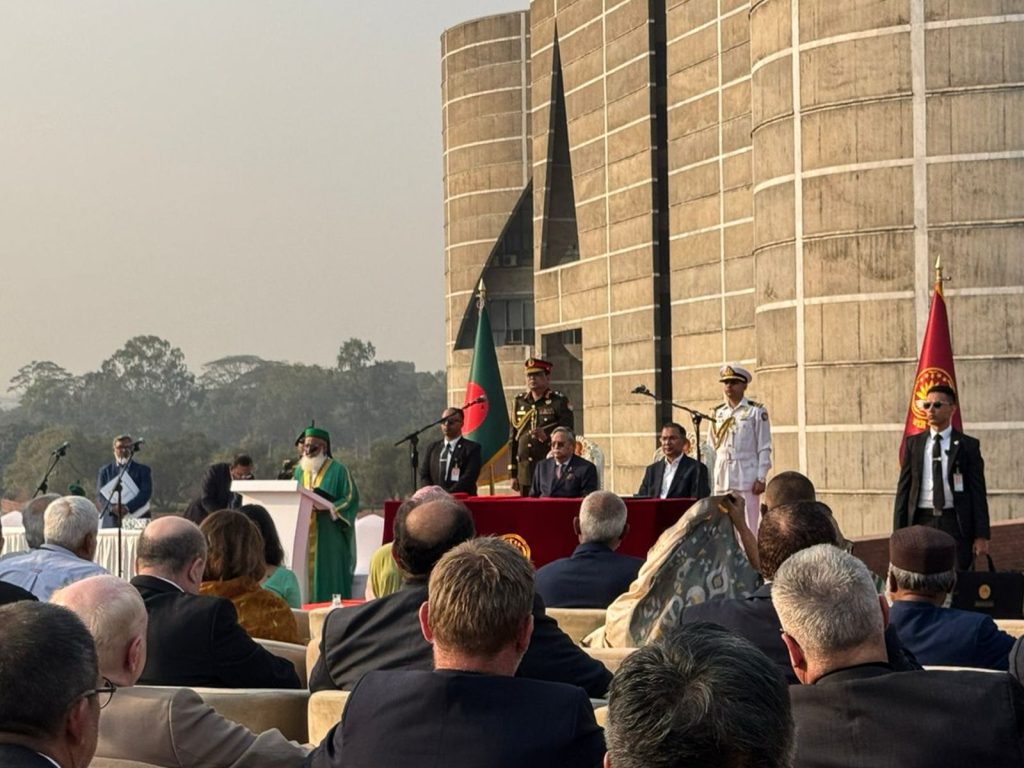
The BHBCUC’s proposal highlights the need for symbolic gestures of religious harmony in public life, particularly in a nation where Islam is the state religion but the constitution upholds principles of secularism and equality for all faiths.
Hindus remain vulnerable as radical Islamists go to parliament in rigged election
Hindu temples attacked, Kali idols desecrated in Faridpur, Rajbari amid blanket impunity
Yunus Backs Jihadists: Hindus butchered with impunity as sham elections loom
Such a step, the organisation argued, would reflect the spirit of inclusivity and help rebuild trust among religious minorities amid ongoing concerns about their security and representation.
The call for multi-faith inclusion coincides with the swearing-in of the new parliament and cabinet, where only four MPs from minority communities were elected—all on BNP tickets—despite broader participation by minority candidates.
A total of 80 minority aspirants contested the polls, including 68 from 22 registered parties (out of 60, with the Awami League banned) and 12 independents. However, success remained limited, with just four victories: Goyeshwar Chandra Roy (Dhaka-3, securing 98,785 votes), Nitai Roy Chowdhury (Magura-2, 147,896 votes), Saching Pru (Bandarban, 141,455 votes), and Dipen Dewan (Rangamati, 201,544 votes).
Notably, Nitai Roy and Dipen Dewan were sworn in as full ministers on Tuesday.
Yunus’ Hate Campaign: Another Hindu youth burned alive in Narsingdi
Hindu Lynching: High Court slams Yunus regime with demand for massive compensation
Hindus protest in Dhaka, London, demanding sanctions on Yunus regime
The BNP fielded six minority candidates overall, while Jamaat-e-Islami and the National Citizen Party (NCP) each nominated one (both unsuccessful). Leftist groups, such as the Communist Party of Bangladesh (CPB), fielded 17 minority candidates, underscoring wider political engagement but highlighting the challenges minorities face in securing electoral success.
The BHBCUC’s statement also draws attention to the broader context of minority vulnerabilities. Since the regime change in August 2024, following the ouster of Sheikh Hasina, religious minorities have reportedly endured over 3,000 attacks attributed to anti-Awami League elements, including supporters of the BNP, Jamaat-e-Islami, NCP, Bangladesh Khelafat Majlish, Islami Andolan Bangladesh, and other radical Islamist groups. These incidents, often involving violence against homes, businesses, and places of worship, have raised serious concerns about communal harmony.
The Jamaat-led alliance securing 77 seats in the parliament has created concern among the minorities, as they fear further attacks and intimidation.
The interim government under Muhammad Yunus classified many of these attacks as politically motivated rather than communal and refrained from pursuing legal action under relevant laws, a stance that drew criticism from minority advocates. It also suggested dropping secularism from the Constitution in the upcoming amendment. In an interview, Yunus even labelled the minorities as Awami League supporters to legitimise mob attacks and other inhuman treatment.
 English
  Bengali