In a poignant display of generosity that transcends one of South Asia’s most storied political rivalries, Sheikh Hasina, the exiled Prime Minister of Bangladesh, has extended heartfelt condolences on the passing of her longtime adversary, Begum Khaleda Zia.
The message, released on Tuesday amid a backdrop of personal and political turmoil, underscores Sheikh Hasina’s capacity for compassion even in the face of deep-seated enmities.
Sheikh Hasina, the five-time prime minister and daughter of Bangladesh’s founding father, Bangabandhu Sheikh Mujibur Rahman, issued the statement expressing her “deepest condolences” on the death of the Bangladesh Nationalist Party (BNP) chairperson and former prime minister.
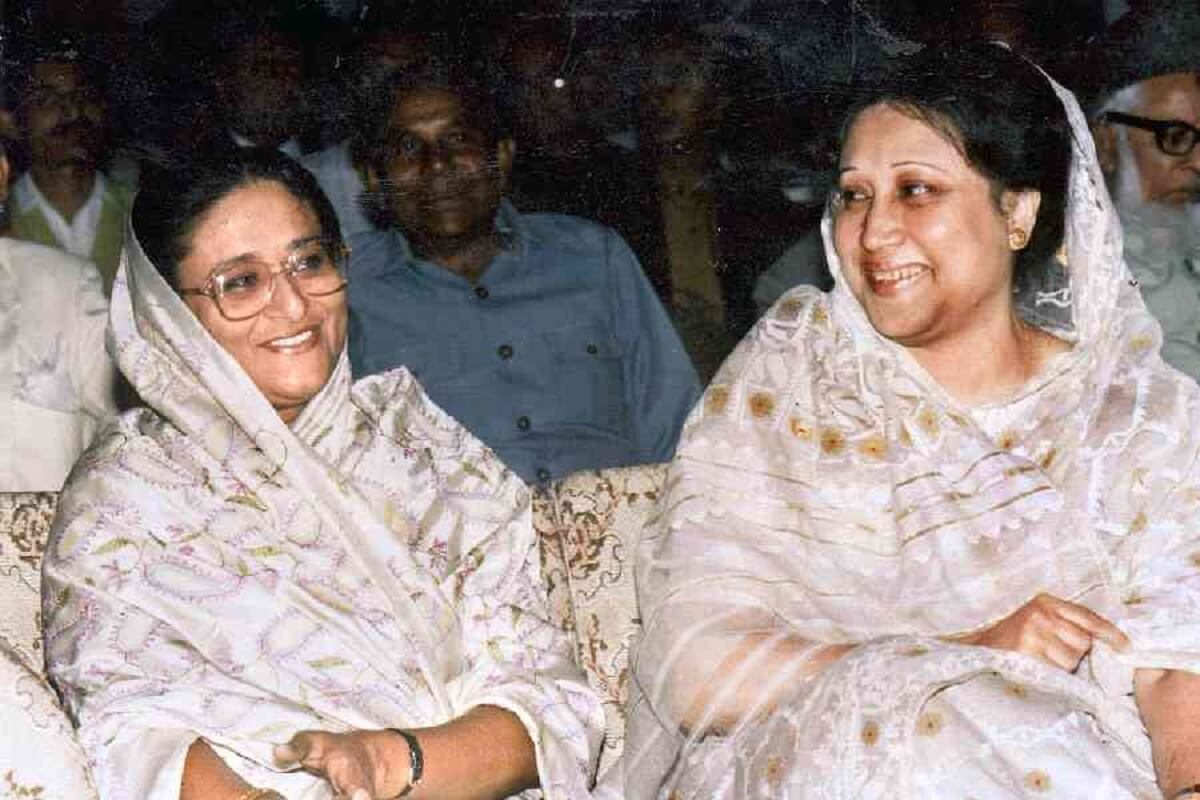
Highlighting Khaleda Zia’s historic role as the country’s first female prime minister and her contributions to the democratic struggle, Sheikh Hasina noted that her passing represents “a profound loss for Bangladesh’s political life and for the leadership of the Bangladesh Nationalist Party.”
Tarique Rahman’s Human Rights Day Message: A masterclass in duplicity
2001-06: How dangerous was Tarique Rahman?
Barisal BNP leader Sarfuddin admits to allowing extortion, bribing Khaleda Zia
In a deeply personal touch, Sheikh Hasina prayed for the “eternal peace and forgiveness” of Khaleda Zia’s soul while conveying sincere sympathies to her son, Tarique Rahman, her bereaved family, and the broader BNP community. She hoped that “Almighty Allah grants them patience, strength, and comfort to endure this difficult time.”
This act of kindness is not an isolated incident but part of a pattern of outreach from Hasina toward her rival, even during times of intense political friction. Just months earlier, in an exclusive email interview with IANS, Sheikh Hasina voiced grave concern over Khaleda Zia’s deteriorating health while the BNP leader was hospitalised under heavy security in Dhaka.
“I am gravely concerned to hear that Begum Khaleda Zia is ill and will pray that she can make a recovery,” Hasina stated, setting aside decades of accusations and conflicts to offer prayers for her opponent’s well-being. This rare expression of empathy came at a time when Sheikh Hasina herself was in exile in India, following her ouster in August 2024 amid widespread protests.
Sheikh Hasina’s generosity extends further back, notably to 2015, when Khaleda Zia suffered the tragic loss of her younger son, Arafat Rahman Coco, who died of a heart attack in Malaysia. In a move that surprised many observers, Sheikh Hasina, then serving as Prime Minister, personally attempted to visit Khaleda Zia’s office in Dhaka’s Gulshan area to offer her condolences.
Despite being cursed, Sheikh Hasina expresses concern for ailing Khaleda Zia
Khaleda Zia gets VVIP status and SSF protection as Tarique notices invisible threat
February 15 election: Khaleda Zia’s disgraceful record of rigging
Despite being turned away at the gate—an incident Sheikh Hasina later described as “insulting,” with Zia’s aides claiming she was asleep—the gesture highlighted Hasina’s willingness to bridge divides during moments of personal grief. It stood in stark contrast to the often acrimonious exchanges between the two leaders, whose rivalry has shaped Bangladeshi politics for over four decades.
The feud between Sheikh Hasina, now 78, and Khaleda Zia, who was 80 at the time of her passing, has been marked by dramatic episodes, including allegations of violence, corruption, and political persecution. Sheikh Hasina’s tenure transformed Bangladesh into one of Asia’s fastest-growing economies, with tripled GDP per capita and reduced poverty rates, but ended amid controversy, including a recent in-absentia death sentence for alleged crimes during the 2024 crackdown—a verdict she has called politically motivated. Khaleda Zia, widow of former President Ziaur Rahman, led the BNP through turbulent times but faced her own accusations of graft and militancy ties.
Why Tarique Rahman still cannot come home after 17 years
‘Tarique Rahman blaming AL for brother Koko’s death baseless, shameful’
Yet, in these final chapters, Sheikh Hasina’s actions—praying for recovery, seeking to console during family loss, and now offering dignified condolences—paint a picture of a leader capable of rising above bitterness. Political analysts suggest this could pave the way for reconciliation in a divided nation, as Bangladesh navigates its future without two of its most influential figures.
As the country mourns Khaleda Zia, Sheikh Hasina’s words serve as a reminder that even in politics, humanity can prevail. “Her contributions to the nation were significant and will be remembered,” Sheikh Hasina affirmed, ensuring that generosity, not grudge, defines this moment.
 Bengali
  English