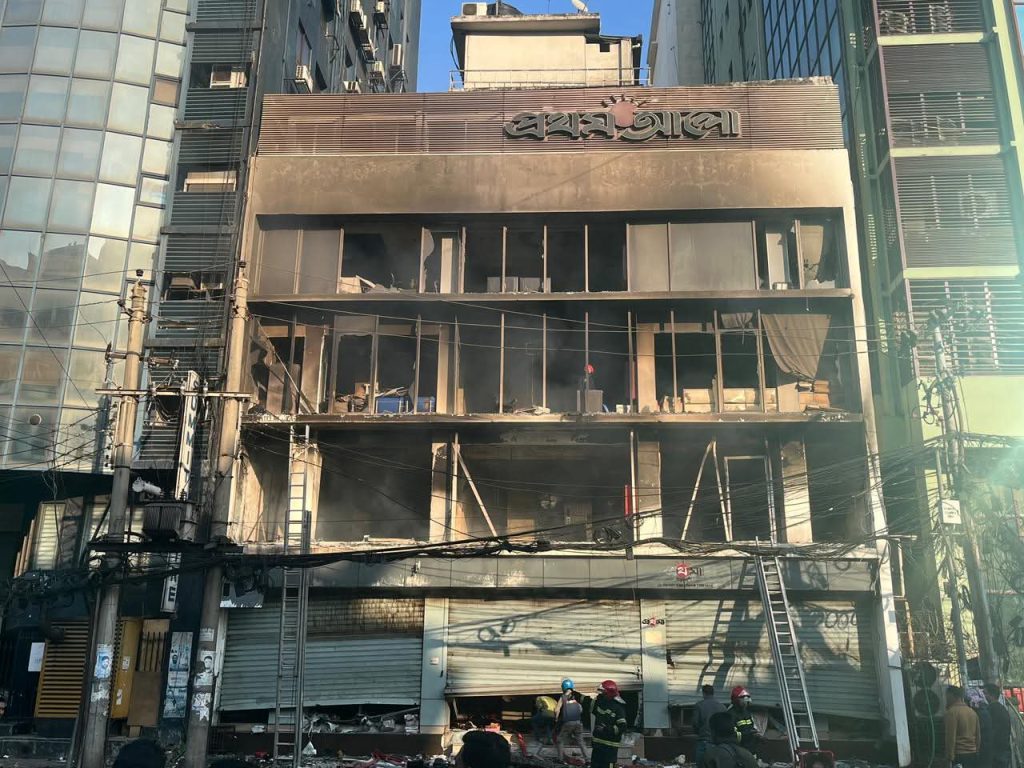
Radical Islamists took to Shahbagh on Thursday night to demand justice for mob leader Sharif Osman Hadi, who died during a critical surgery in Singapore. Meanwhile, another mob carried out vandalism, looting, and arson attacks on the offices of two newspapers, supporting the jihadist-backed Yunus regime.
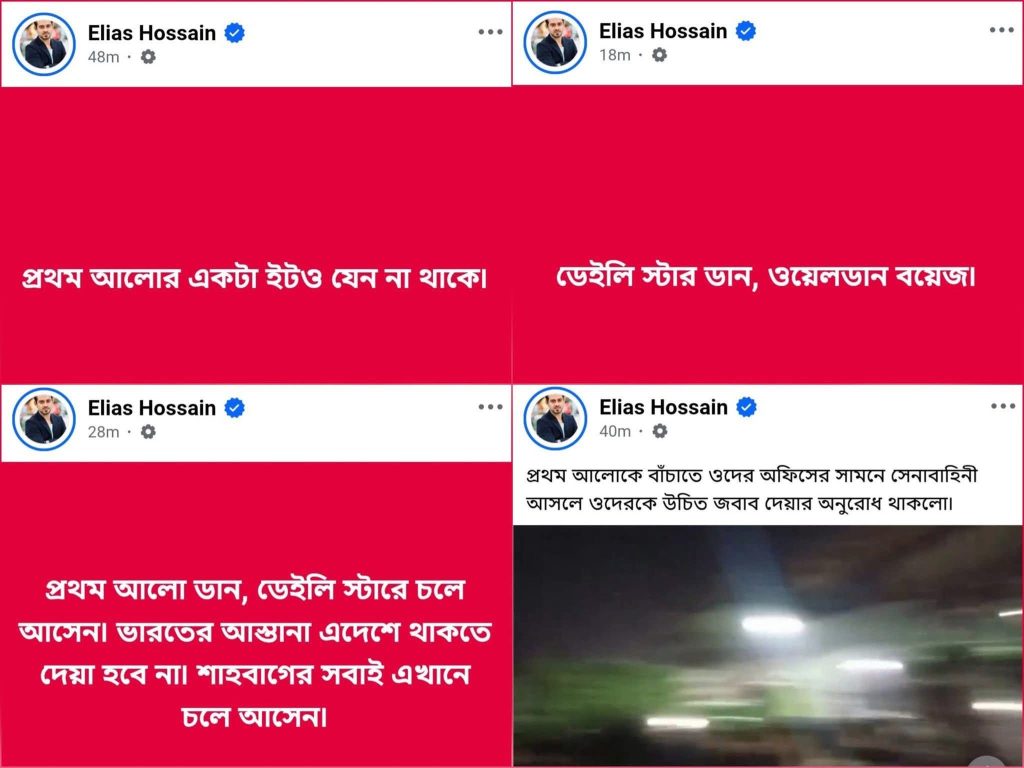
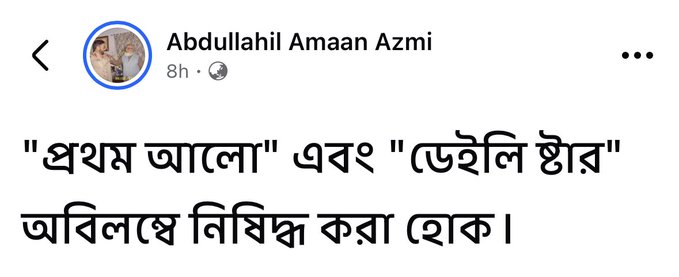
Members of the army and police remained onlookers when the Touhidi Janata mob carried out the attacks, being instigated by Facebook posts of expatriate mobsters Pinaki Bhattacharya and Elias Hossain, who are known as henchmen of the daily Amar Desh Editor Mahmudur Rahman, a close aide of Muhammad Yunus.
Around midnight, after some 30-35 journalists trapped on the roof of The Daily Star office at Karwan Bazar gave posts on Facebook seeking help, the army and the Fire Service intervened for less than half an hour for evacuation.
A senior army official was seen urging the mob leaders to give them 20 minutes for evacuation, following which they carried out the second spell of looting and vandalism.
Yunus’ mob leader Osman Hadi succumbs to gunshot injuries in Singapore
Sheikh Hasina lambasts Yunus-Jamaat clique for demeaning Victory Day
Home Adviser stirs criticism by ordering mass arrest of Awami League members
The head office of the daily Prothom Alo was not damaged, as the mob targeted its old building nearby, which houses the office of Prothoma Publications and a canteen.
Around the same time, another mob went to Dhanmondi-32 to dismantle the ruins of the Bangabandhu Memorial Museum for the fourth time since August 5, 2024. They continued breaking the brick walls till Friday afternoon, in the presence of the army and the police.
The most shocking news came from Chittagong city, where the office-cum-residence of the Indian Assistant High Commissioner came under attack from a mob.
Most commonly, in all the attacks, the mobs were chanting Naraye Taqbir and Inqilab Zindabad slogans, which are commonly used by Jamaat-Shibir and the National Citizen Party (NCP)—Yunus’ brainchild. Everywhere, the mobs carried the flags of al-Qaeda, and in Shahbagh, journalists spotted al-Qaeda cleric Jasimuddin Rahmani making an infuriating speech against India and the Awami League.
The protesters were blaming the Awami League for the shooting of Hadi on December 12 and India for sheltering the alleged shooter, who had sneaked into India.
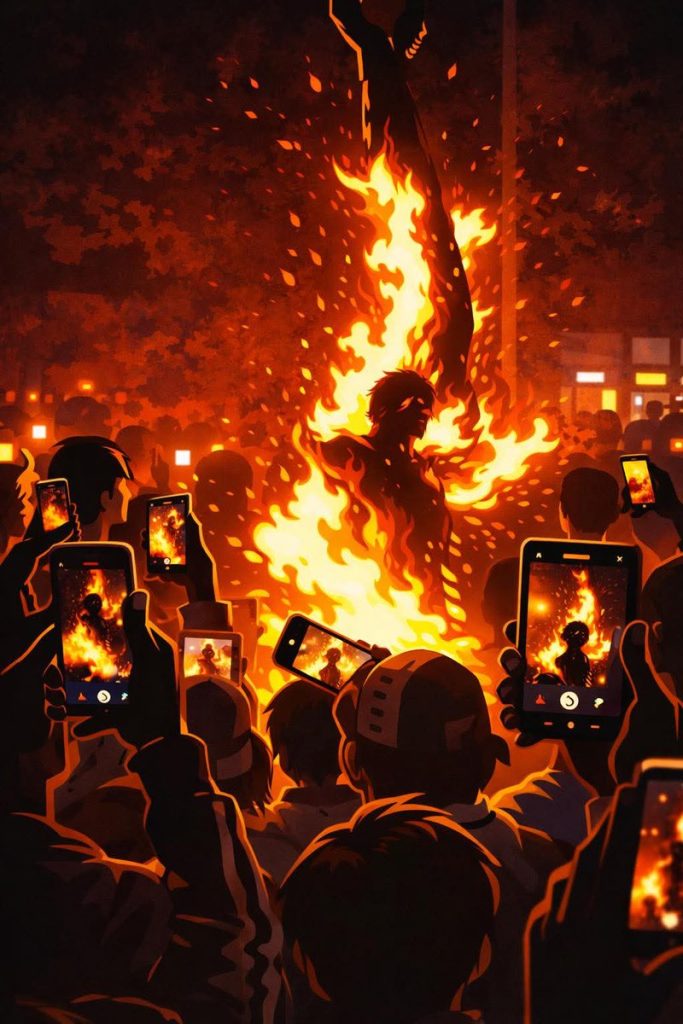
The same night, a Hindu man was lynched and burned alive on the Dhaka-Mymensingh Highway, allegedly for defaming the Prophet Mohammad amid anti-India protests by Yunus supporters. No army or police intervened to ensure the rule of law.
In fact, this protest began earlier in December when Jamaat-linked former military officers started anti-India campaigns, demanding Sheikh Hasina’s repatriation, while threatening to sever the Seven Sisters from India in line with the warnings issued by Yunus since last year.
Delhi on edge as anti-India protests rock Dhaka, threaten northeast security
US issues fresh security alert for Bangladesh as pre-election tensions escalate
Jamaat leaders’ cow feast near sacred Chandranath Temple sparks outrage
The demand and the threats were renewed during an all-party rally at the Central Shaheed Minar in Dhaka on December 15, where NCP leaders and Mahmudur Rahman issued an ultimatum till December 25 for Sheikh Hasina’s repatriation. Otherwise, they threatened to destroy all Indian installations in Bangladesh and annihilate the Awami League amid the special crackdown by the joint forces, styled Operation Devil Hunt-2.
Centring the Victory Day celebrations, Jamaat-e-Islami leadership made stunning claims that they fought against the Pakistan Army in 1971, and the intellectuals were killed by the Indian forces—not the Pakistan Army and their collaborators—in their frantic attempts to distort the history of the Liberation War.
The same threats have been issued from Shahbagh from Thursday night until Friday. Political observers fear that mob attacks will increase in the future to foil the February 12 elections, when the BNP is likely to win and form the government, sending the Jamaat and the NCP to the opposition bench.
Several journalist organisations in Bangladesh have strongly condemned the vandalism, arson, and looting at the newspaper offices. These attacks trapped staff inside burning buildings and forced both publications to suspend operations.
The Dhaka Union of Journalists (DUJ), led by President Sazzad Alam Khan Tapu and General Secretary Akhtar Hossain, described the incidents as “unacceptable under any circumstances,” expressing shock and highlighting the severe insecurity faced by journalists and fear among their families.
They also noted the harassment of Editors’ Council President and New Age Editor Nurul Kabir while he attempted to intervene, and condemned the separate killing of journalist Imdadul Haque Milon (president of Sholua Press Club in Khulna) on December 18, demanding justice for his shooters.
The Media Freedom Coalition (a global partnership of over 50 countries promoting press freedom) called the violence “unacceptable,” stating it undermines press freedom, the public’s right to information, democratic values, and the rule of law. They emphasised that journalists must work without fear.
The Diplomatic Correspondents Association, Bangladesh (DCAB), in a statement by President AKM Moinuddin and General Secretary Arifuzzaman Mamun, affirmed that independent journalism is foundational to democracy. They rejected violence, intimidation, or harassment aimed at silencing the media as contrary to freedom of expression and the rule of law, urging swift investigations, perpetrator accountability, and enhanced government measures for journalist safety. DCAB also condemned the arrest of its former president, Anis Alamgir.
These groups unanimously demanded identification and prosecution of those responsible, viewing the attacks as a direct threat to media freedom and democratic principles in Bangladesh.
Prothom Alo Offices Outside Dhaka
In addition to the targeted attack on its headquarters in Dhaka’s Karwan Bazar, offices of the Prothom Alo were vandalised in three districts across Bangladesh on December 18-19. During the attacks, furniture and signboards were extensively damaged.
Kushtia
The attack on the Prothom Alo office in Kushtia’s Majampur area took place around 1 a.m. Located on the third floor of a five-story building, the office suffered widespread vandalism, including damage to chairs, tables, file cabinets, and other furniture.
CCTV footage showed a group of assailants armed with sticks climbing the stairs after 1 a.m. They first smashed the signboard outside, then broke flower pots, forced entry by breaking the lock, and ransacked the interior. Shelves, books, and a harmonium from the Kushtia Bondhusabha library were also destroyed.
Prothom Alo’s Kushtia correspondent Touhidi Hasan reported that no staff were present. The building owner informed him of the vandalism around 1:30am.
On Friday morning, journalists from the Kushtia Press Club and the Television Journalists Association visited the site and strongly condemned the attack. Kushtia Police Superintendent Mohammad Jasim Uddin called Hasan to inquire about the incident and assured efforts to identify those involved.
Kushtia Journalists’ Union President Abdur Rajjak condemned the attack, stating: “We strongly protest this assault and vandalism at the Prothom Alo office in Kushtia. Those seeking to destabilise the country and pave the way for fascism’s return will find this helpful.”
Khulna
Around 1am, a group of miscreants attacked the Prothom Alo office on Sultan Ahmed Road in Maulvibazar, Khulna. They removed a signboard and anniversary banners, set them on fire, and vandalised a table.
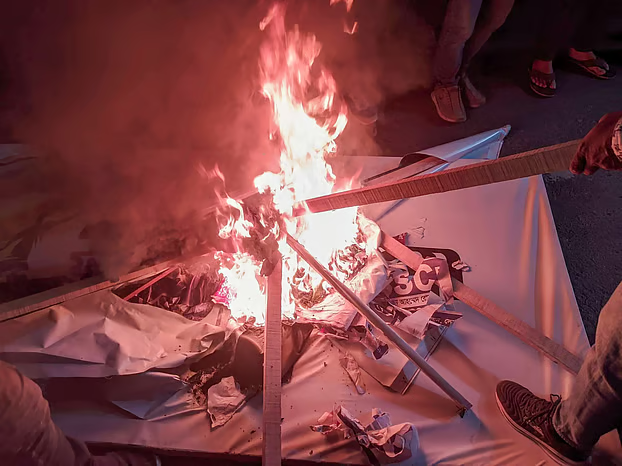
Eyewitnesses said the group first searched for the old office location at Maylapota Mor before heading to the current site. They threw bricks, removed lights from the main gate, climbed over the steel gate to the veranda, and took the signboards and banners to Modern Furniture Mor on Khan Jahan Ali Road, where they burned them. Before leaving, they threatened to demolish the office on Friday morning.
Police were deployed to the Khulna office from Friday morning. Khulna Metropolitan Police stated that security has been strengthened, with senior officers monitoring the situation. Local journalists also visited the site.
Khulna journalist Hasan Himalaya posted on Facebook: “I’ve been at the Prothom Alo office since morning… Just as everyone came forward regardless of party during the uprising, I call on everyone to step forward again.”
Sylhet
Miscreants threw bricks and stones at the Prothom Alo office in Sylhet’s Barutkhana area around midnight on December 18, breaking the window glass and damaging items inside. No one was present in the office. Eyewitnesses reported a sudden group arriving, chanting slogans, and hurling projectiles before fleeing.
Sylhet Metropolitan Police Additional Deputy Commissioner (Media) Mohammad Saiful Islam told Prothom Alo that police visited the site and deployed personnel outside the office.
Chattogram
Around 12:15am., a group of 50–60 people gathered in a procession outside the Prothom Alo Chittagong office in Hillview Residential Area. CCTV footage showed them chanting slogans and attempting to enter the building, armed with bricks and sticks. Two private cars were seen parked there beforehand. They stayed for about 30 minutes before dispersing.
Bogura
Multiple attempts to attack the Prothom Alo regional office in Bogura occurred from Thursday night through Friday afternoon but were thwarted by law enforcement’s alert presence.
Police positioned themselves outside the office from Thursday night after the Dhaka attack. Following announcements of an assault after a blockade program at Banani Mor, police created security cordons. By Friday afternoon, police, army, and RAB patrols were intensified.
Bogura District Detective Police In-Charge Iqbal Bahar said DB police patrols were strengthened from Thursday night, remaining vigilant to prevent any unpleasant incidents.
Barishal
On Thursday night, a few individuals pushed and shoved at the main gate of the Prothom Alo Barishal regional office, but could not enter as it was locked.
 Bengali
  English