In a powerful display of solidarity and defiance, around 50 members of Bangladesh’s Chittagong Hill Tracts (CHT) indigenous communities rallied in Sydney, Australia, on November 8, condemning the Bangladeshi army’s lethal crackdown on peaceful protesters and the interim government’s sponsorship of communal violence against ethnic minorities.
Organized by expatriate Marma and allied groups, the demonstration at Sydney Town Hall—from 9am to noon—highlighted the gang rape of a 12-year-old Marma girl and the subsequent deaths of three young indigenous men at the hands of security forces, framing these atrocities as part of a broader pattern of human rights abuses fueled by pro-Pakistani elements within the Yunus-led interim regime, reports Narinjara News Agency.
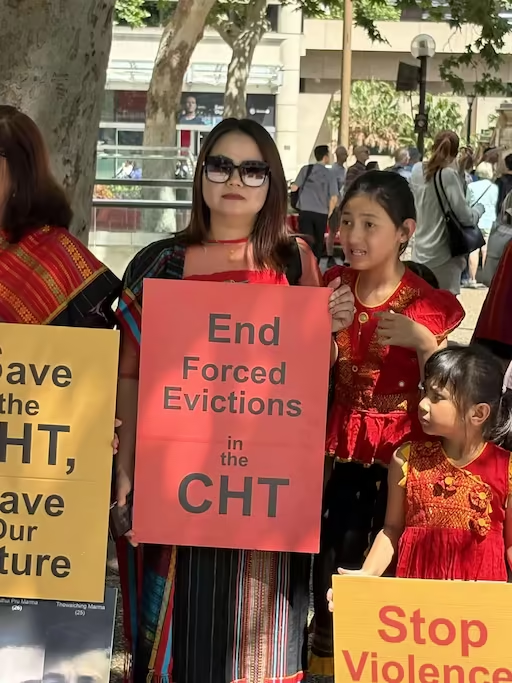
Amid chants and placards, protesters demanded an impartial judicial inquiry into the rape, killings, and riots, insisting it be led by UN Human Rights Commission representatives or retired judges with full participation from local indigenous communities to ensure equity and uncover the truth buried under layers of disinformation.
The protest, joined by representatives from Marma, Chakma (Chetkama), Nepalese, Garo, Hindu, Khasi (Kanyan), and Tripura communities, echoed global calls for accountability, with organisers accusing the Bangladesh army of not only suppressing dissent but also disseminating disinformation to shield perpetrators, including Bengali settlers emboldened by the regime’s inaction.
“The army killed three young men during the demonstration and falsely blamed the UPDF (United People’s Democratic Front). The real casualty count could be higher; people are terrified and silenced by fear. This is state-sponsored terror,” one organiser told Narinjara, voice trembling with rage.
In a resounding call to the international community, they urged United Nations agencies and global NGOs to provide oversight, monitor implementation of reforms, enforce compliance, and deliver essential support like trauma counselling, police sensitisation training, and broader governance overhauls tailored to the CHT’s unique vulnerabilities.
Khagrachhari Riots: Minority group demands judicial inquiry without delay
Khagrachhari Rape, Riots: Activists demand judicial inquiry, withdrawal of army
Khagrachhari Riots: 3 Adivasis killed as Army, Bengalis resist anti-rape protest
Building on this urgency, the demonstrators called for a crackdown on fake news and irresponsible media, holding outlets accountable for spreading army-fueled disinformation on the violence and mandating strict adherence to ethical journalism standards to prevent further incitement of communal hatred.
These demands were not abstract pleas but a blueprint for dismantling the systemic oppression that has plagued the hills for decades, with the Sydney action serving as a beacon for expatriates and allies worldwide. The gathering’s multicultural solidarity amplified voices long marginalised, transforming personal grief into a collective indictment of the interim government’s failures.
From Gang Rape to Bloody Suppression in Khagrachhari
The Sydney action stems from a horrifying chain of events that erupted on September 23, 2025, in Guimara, Khagrachhari district, when Bengali settlers gang-raped a 12-year-old Marma schoolgirl, sparking widespread indigenous outrage. Protests and blockades followed, demanding justice for the victim and an end to systemic predation on CHT women—seven Adivasi women have been raped in the district over the past year alone, with victims and activists routinely targeted, cases dragged out, and the state offering zero cooperation.
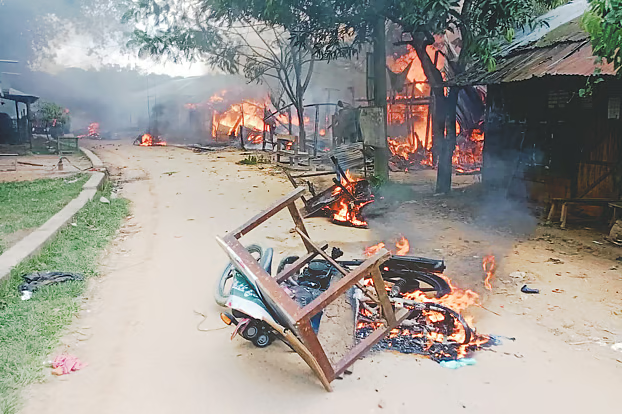
Rather than arresting the rapists or protecting vulnerable communities, the response from the army-dominated interim government was swift and savage. On September 25, security forces opened fire on demonstrators, killing three Marma youths: Athui Pru, 26, Towaiching, 25, and Akhro, 24. At least 15 others were injured, six went missing, and arson razed 15 homes, 60 shops, and 13 motorcycles owned by indigenous families—all under the “patronage” of law enforcement, as decried by the Bangladesh Hindu Bouddha Christian Oikya Parishad (BHBCOP) in an October 2 statement.
Human rights groups, including Transparency International Bangladesh (TIB) and the Asia Indigenous Youth Platform (AIYP)—which issued a condemnation on November 4—have slammed the regime for failing to conduct a timely medical examination of the survivor within 72 hours, a blatant violation of protocol that compounds the trauma. “Rape isn’t just a crime here; it sows panic, forcing hill people from their ancestral lands,” noted activists from the Ganatantrik Odhikar Committee, who allege the army- and Jamaat-e-Islami-backed interim government is deliberately stoking ethnic tensions to derail democracy in the hills.
This isn’t isolated brutality—it’s a calculated escalation. Provocative rhetoric from officials, including the Home Affairs Adviser, has inflamed the CHT, where military rule persists despite the 1997 Peace Accord. The Awami League, Bangladesh Udichi Shilpi Gosthi, and Bangladesh Mahila Parishad have all condemned the gunfire killings as a “denial of democratic rights” and “racial discrimination,” warning of long-term insecurity for indigenous lives.
Awami League condemns killing of 3 people by gunfire in Khagrachhari
Canada’s travel advisory for Bangladesh exposes volatile situation
Army, Yunus regime are suppressing gang rape of Tripura girl in Khagrachhari
Even Canada’s recent travel advisory underscores the “volatile situation,” exposing how the Yunus regime—hailed once as a Nobel beacon—has “opened the gates to Islamist militancy,” per critical analyses, allowing pro-Pakistani forces to sponsor communal hatred and suppress indigenous voices.
TIB’s October statement laid bare the rot: A “peaceful movement” against the rape devolved into riots due to “vested interests,” with the army shielding settlers while indigenous protesters bore the brunt. “The tactic of creating conflict to evade justice is condemnable,” echoed Mahila Parishad, terming the rally attack a “fundamental rights violation.”
A Resolute Ultimatum: The Path to Demilitarisation and Peace
The protesters’ seven-point ultimatum extended beyond immediate accountability, targeting the entrenched militarisation that perpetuates these cycles of violence. Central to their vision was the full implementation of the 1997 CHT Peace Accord, a long-ignored treaty meant to resolve root causes like land rights and autonomy, thereby shielding indigenous existence from settler encroachments and fostering sustainable coexistence.
Equally critical was their insistence on ending military governance in the CHT entirely, calling for the complete withdrawal of army presence that enables such abuses, coupled with a ban on deploying Bangladeshi military personnel implicated in violations to UN peacekeeping roles—a measure to tarnish the force’s global image until domestic sins are atoned.
Minority persecution lacks UN attention, accountability
Extremism: India, Myanmar, Nepal should be cautious about Bangladesh
US worried over rising attacks on minority rights in Bangladesh
To safeguard the fragile peace, they demanded the deployment of a dedicated UN peacekeeping mission in the CHT, one that would protect civilians, mediate escalating tensions, and oversee the demilitarisation process amid the rising tide of communal threats sponsored by the regime.
Finally, underscoring a broader accountability for international complicity, the call culminated in the prompt removal of Bangladeshi troops from all UN peacekeeping operations worldwide, a stark signal of zero tolerance for forces that brutalise their own people at home while donning the blue helmet abroad.
These demands, echoed by BHBCOP’s parallel pleas for Tk1 crore compensation per deceased family and Tk25 lakh per affected household, plus free medical care, represent a unified front against impunity. As one protester declared: “From Nobel laureate to enabler of jihadist shadows—Yunus’ regime must fall to the will of the hills.”
 Bengali
  English