In a move that can only be described as economic hari-kari, Bangladesh has signed a so-called “mutual trade agreement” with the United States, effectively handing over its sovereignty on a silver platter to Washington. This disastrous pact, inked on February 8, in the US capital, forces Bangladesh to overhaul its tariffs, labour laws, digital policies, agricultural regulations, investment rules, and even national security protocols—all to appease America’s insatiable appetite for reducing its trade deficit.
Forget independence; this is tantamount to selling out the country to foreign overlords, committing Bangladesh to billions in forced imports while getting scraps in return. It’s a betrayal of the nation’s farmers, workers, and future generations, disguised as “progress.”
Under this toxic agreement, Bangladesh must ramp up purchases of US military hardware, ensuring that its defense spending lines American pockets rather than seeking better deals elsewhere. The deal explicitly demands limiting arms imports from “certain countries”—a not-so-subtle jab at rivals like China and Russia—while boosting buys from the US.
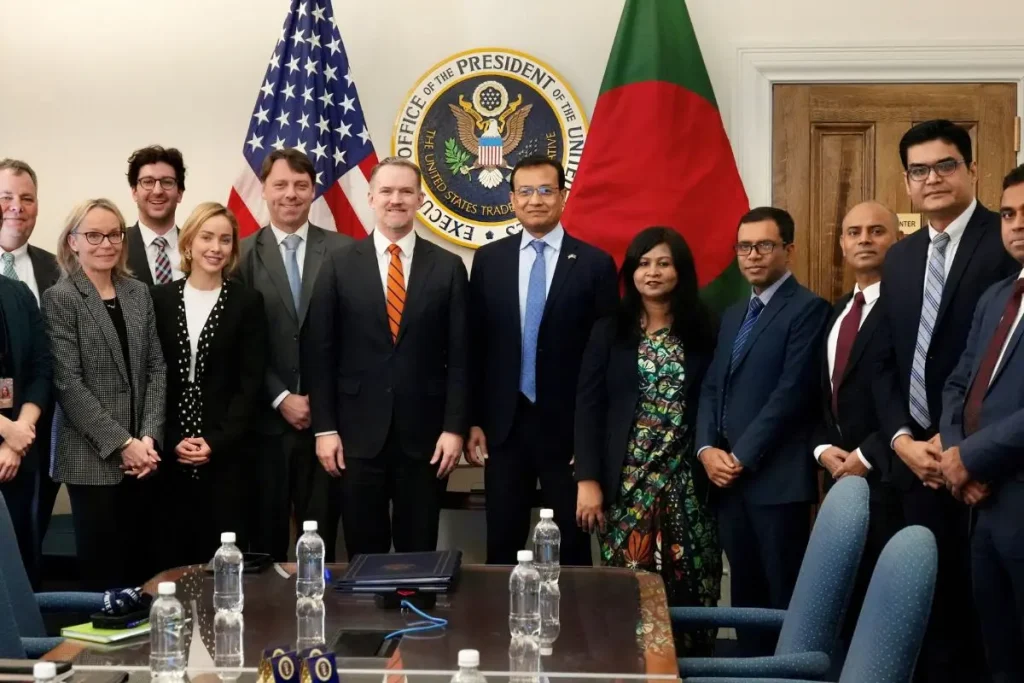
This isn’t partnership; it’s vassalage, turning Bangladesh’s military into a captive market for overpriced Yankee junk. And let’s not forget the energy noose: Bangladesh is locked into long-term contracts for liquefied natural gas (LNG) from the US, committing to import around $15 billion worth over the next 15 years. That’s right—billions funnelled straight to American energy giants, even as domestic needs go unmet and prices soar for ordinary Bangladeshis.
The agricultural sellout is even more grotesque. Bangladesh is obligated to buy 700,000 tons of wheat annually, plus 2.6 million tons of soybeans and soy products, and massive quantities of cotton—totalling a staggering $3.5 billion in US farm goods every year.
Hush-ups over publishing wealth statements of Yunus, his advisers continue
Prothom Alo exposes Yunus regime’s discriminatory, mindless project spree
Ashik Chowdhury: The sham investment czar faces media bashing
This floods the market with American produce, undercutting local farmers and destroying self-sufficiency. Who benefits? US agribusiness behemoths, not the struggling Bangladeshi peasants whose livelihoods are being crushed under this imperial boot.
Pro-regime cheerleaders like Kallol Mustafa, in a fawning X post, bizarrely hailed this as a masterstroke: “The US is stabilising Bangladesh’s politics with its administration’s help… Bangladesh will buy military equipment from the US, LNG, and agricultural and digital products… In return, the US will help develop Bangladesh’s economy… The agreement is worth 57 billion dollars!”
Mustafa’s delusional praise ignores the reality—this isn’t “help”; it’s exploitation, with Bangladesh footing the bill for America’s trade imbalances, currently exceeding $6 billion in the US’s favour.
The tariff concessions are an outright capitulation. Bangladesh must slash import duties, supplementary duties, and regulatory duties on thousands of US products, phasing them out entirely for over 4,500 categories immediately upon implementation, and gradually for another 2,210. No quotas allowed, no non-tariff barriers—nothing to protect local industries from being steamrolled by cheap American imports.
Bangladesh On The Bargaining Table: A running ledger of big-ticket deals under Yunus
Golden Spectrum Scam: Yunus’ Grameenphone secures 700 MHz band at base price
Yunus hosts Azerbaijani president’s daughters in money-laundering storm
Medical equipment, drugs, and industrial goods? US approvals are now final; no questions asked. Food and agricultural certifications? Ditto—Bangladesh must accept whatever the FDA stamps. Intellectual property? Stricter enforcement, including joining international treaties that favour US corporations, with criminal penalties for violations. Labour and environmental laws? Beefed up to US standards but without the resources to enforce them, leaving workers exposed while multinationals exploit loopholes.
In exchange? Pathetic crumbs. The US offers duty relief on 1,638 Bangladeshi product categories, waiving 19% countervailing duties—but only if Bangladesh uses US cotton for garments, and normal MFN tariffs still apply.
Last fiscal year, non-apparel exports to the US were just $1.17 billion; this “benefit” is a drop in the ocean compared to the revenue Bangladesh will lose—estimated at 38% of import duties from the US, or hundreds of crores in forgone taxes. Revenue officials are already panicking about the fiscal black hole this creates, and experts warn it could force similar concessions to other countries under WTO rules, amplifying the damage.
As CPD fellow Mostafizur Rahman bluntly put it, this isn’t a free trade agreement—it’s a one-sided shackle that could crater government revenues if replicated globally.
Even the regime’s own mouthpieces can’t spin this without sounding absurd. Commerce Advisor Sheikh Bashiruddin pathetically claimed at a press conference that the deal reduces the US trade deficit and secures “major achievements” like dropping countervailing duties from 20% to 19%, plus zero duties on US cotton-based apparel exports. He even boasted of an escape clause allowing withdrawal with notice—as if future governments won’t be buried under the economic rubble this creates.
Exclusive: Ex-NSI officer proves how Yunus hijacked microcredit idea
The Sunday Guardian: Yunus turned public benevolence into private dominion
Yunus’ Floor Space Scandal: Ex-NSI officer exposes Nobel laureate’s corruption
Pro-regime sycophant Arifuzzaman Tuhin echoed this nonsense in his X post, dismissing critics as the “lowest people” and insisting the agreement brings “economic prosperity”: “The government is doing something every day to protect the country’s independence… ‘Ten good days’ is a signal—one good thing is coming, that is the US-Bangladesh agreement… The opposition is saying bad things about the agreement, but they are wrong. The agreement is good for Bangladesh.”
Tuhin’s bootlicking overlooks the obvious: this pact prioritises US interests, forcing Bangladesh to buy overpriced goods, dismantle protections, and align with American geopolitics—all while local industries suffocate.
Digital and investment rules are the final nail in the coffin. Bangladesh must go fully paperless on customs by 2030, ban discriminatory digital taxes on US firms, and coordinate with US export controls and sanctions. Third-country companies undercutting US prices? Bangladesh has to block them. Nuclear reactors or fuel from “conflicting” nations? Strict limits imposed. This isn’t trade; it’s neo-colonialism, ensuring Bangladesh can’t pivot to better partners without Uncle Sam’s approval.
Business leaders are already sounding alarms, albeit cautiously. Meghna Group’s Mostafa Kamal admitted that meeting soybean import quotas requires protecting local mills with new duties on finished products—essentially admitting the deal disrupts markets. Delta Agrofood’s Amirul Haq claimed it’s doable with “policy support,” but that’s code for subsidies taxpayers will fund. Textile execs hope for cotton import boosts, but at what cost? As Rahman warned, fulfilling $3.5 billion in annual agriculture imports means bypassing cheaper sources, potentially requiring government overpayments or incentives—distorting the economy and raising ethical red flags.
The Great Plunder in MP Project: Corruption and deception under Yunus
Sex Scandal: The deep-rooted romance between Yunus and DP World CEO via Epstein
The Greedy Despot: Sk Bashir Uaddin’s shameless plunder of the aviation sector
Senior journalist Probir Kumar Sarker said that this agreement isn’t mutual; it’s a suicide pact for Bangladesh’s economy, sovereignty, and self-respect. By bending the knee to reduce America’s $6 billion trade deficit, the government has sold out the nation to foreign masters.
Pro-regime voices like Mustafa and Tuhin may parrot propaganda about “stability” and “prosperity,” but the facts scream betrayal. Bangladesh deserves better than this humiliating capitulation—it’s time to wake up before the damage becomes irreversible.
Former diplomat and security analyst Aminul Hoque Polash said that the Yunus-led illegal interim government has effectively crippled the economy of Bangladesh by signing the trade agreement under the guise of a “Non-Disclosure Agreement.”
Through the rigged national elections and referendum on February 12, the Yunus gang essentially wants to ensure the legitimacy and sustainability of their anti-national misdeeds. At the same time, they want to change the country’s constitution and introduce a hanging regime so that it is not possible for any political government to come out of the anti-state decisions taken during Dr. Yunus’ 18-month misrule, he added.
To read the text of the United States-Bangladesh Agreement on Reciprocal Trade, click here. To read the tariff schedule, click here.
To read the Joint Statement on United States–Bangladesh Agreement on Reciprocal Trade, click here.
To read the Fact Sheet, click here.
 English
  Bengali