Former Deputy National Security Adviser of India and High Commissioner to Bangladesh, Pankaj Saran, has issued a stark assessment of the ongoing political turmoil in Bangladesh, warning that right-wing Islamist forces led by Jamaat-e-Islami and Pakistan are the chief beneficiaries of the chaos following capture of power by Muhammad Yunus in August 2024.
In a detailed op-ed titled “In Bangladesh, fake promises and a false enemy,” published on December 23 in The Indian Express, Saran advocates taking a long-term view of the crisis to understand the nation’s trajectory.
Saran notes that power transfers in Bangladesh have rarely been smooth, often following a “winner takes all” pattern where victors assume absolute control and marginalise opponents. He recalls that since Sheikh Mujibur Rahman’s assassination in 1975, politics has been dominated by a bitter rivalry between Khaleda Zia, widow of military dictator Ziaur Rahman, and Hasina, daughter of the founding father.
A notable exception, Saran points out, was the 1991 United Front against dictator Hussain Muhammad Ershad, who was allowed to live and participate in politics until his death in 2019—contrasting sharply with today’s vengeful atmosphere.
The former envoy challenges selective Western criticism of Hasina’s authoritarianism, arguing it ignores Bangladesh’s 50-year history of imperfect democracy under military rulers and others. He dismisses the “exaggerated vilification” of Hasina and the portrayal of Muhammad Yunus as a democratic saviour, noting this view finds little resonance in India.
Bipartisan US lawmakers urge Yunus to reconsider ban on Awami League
Why Trump should designate terrorist party Jamaat, hold Yunus to account
Awami League leader Tofazzel Ronu takes responsibility for family of Dipu Das
Amid personality clashes and score-settling, Saran identifies Jamaat-e-Islami and Pakistan as the true gainers, exploiting the post-August vacuum. The real losers, he writes, are Bangladesh’s youth, fed “fake promises and a false enemy” in India. While debating an Islamic society’s role in addressing development and identity is legitimate, blaming India is a deliberate distraction that misleads the public.
Saran asserts that most Bangladeshis reject this anti-India propaganda on social media and yearn to focus on genuine issues, possible only if Pakistani interference ceases.
He criticises Yunus and his advisers as exacerbating problems, with institutions captured by right-wing Islamists who operate with impunity. Media self-censorship is rampant, and mob rule has returned to the streets, as evidenced by recent arson attacks on newspapers like Prothom Alo.
Hadi Murder Probe: Home adviser knows no whereabouts of suspected killer
Interview With The Wall: Sheikh Hasina signals leadership overhaul
Saran sees elections as a path forward, welcoming reforms to bolster democracy but urging practical implementation. He anticipates turbulence with Bangladesh Nationalist Party leader Tarique Rahman’s expected return after 17 years, potentially sparking massive rallies, compounded by reactions to Khaleda Zia’s health.
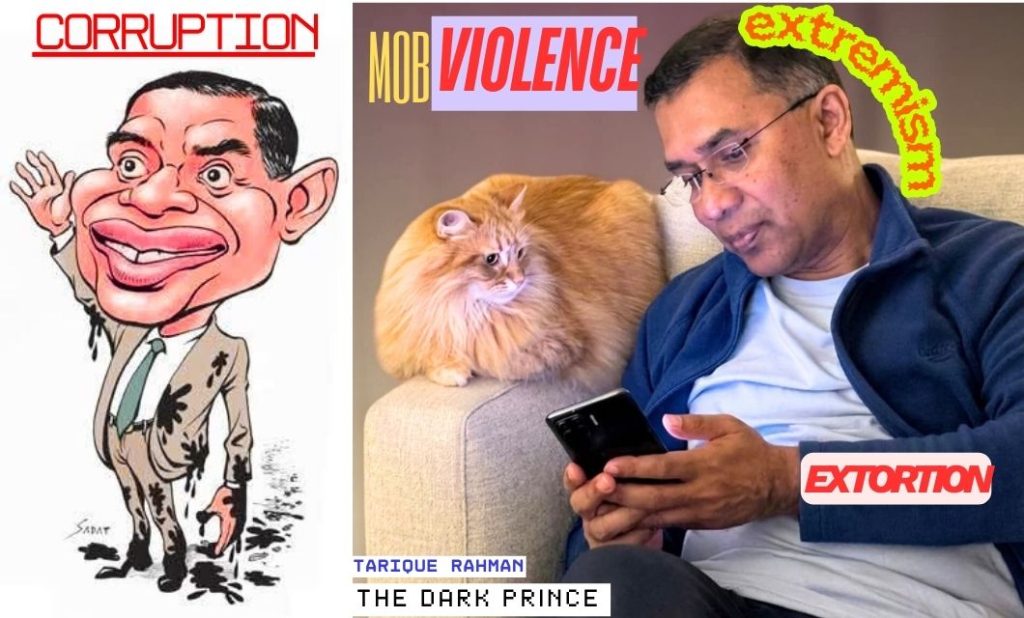
Former allies BNP and Jamaat will now compete fiercely, with Jamaat holding an early advantage and possibly seeking power without polls amid fragile state capacity.
Rights groups want Nobel Committee to react to violations under Yunus
Strategic challenge worries India, but won’t extradite Sheikh Hasina
Credible elections demand impartial machinery and Awami League participation for inclusivity. India, Saran notes, is prepared to engage any new dispensation, adept at countering Pakistan’s manoeuvres while respecting Bangladeshi sentiments.
Finally, Saran emphasises India bears no responsibility for Bangladesh’s internal processes. If a future government seeks strong ties, as in recent years, India will reciprocate. He urges Bangladesh to exercise its agency by avoiding the India-Pakistan rivalry, warning that enabling minority attacks primarily threatens Bangladesh’s own stability. The silent majority, he concludes, awaits its opportunity.
Saran’s insights come amid escalating violence, including minority persecution and anti-India protests, underscoring the risks of prolonged instability as elections approach.
 English
  Bengali