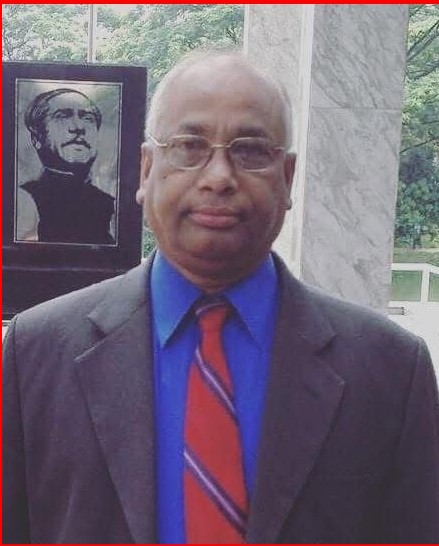
By Dr. Mohsin Ali On February 18, 1969, at the Kazla–Motihar Gate of Rajshahi University, a chemistry professor stepped forward—not as a politician, not as an agitator—but as a guardian. Within moments, he would fall to bullets fired by the Pakistani military. His name was Dr. Shamsuzzoha, Professor of Chemistry and Proctor of Rajshahi University (then in East Pakistan).
In dying, he became more than an educator; he became one of the earliest martyrs of the mass uprising that shook Pakistan to its core and set Bangladesh irreversibly on the path to independence.
A Scholar Formed By Conscience
Born in the 1930s in what was then Bengal, Shamsuzzoha grew up in a society marked by political upheaval and deep social inequality. Brilliant and disciplined, he pursued higher education in chemistry and later joined Rajshahi University as a faculty member. Colleagues remember him as intellectually rigorous, soft-spoken, and morally unwavering. As Proctor, he bore responsibility not only for discipline but for the welfare and safety of students—a duty he would ultimately honour with his life.
The 11-Point Movement And A Nation In Turmoil
By 1969, East Pakistan was in ferment. The 11-Point Student-Peoples’ Movement—expanding on earlier demands for autonomy, democracy, and economic justice—had galvanised campuses and cities. Students marched to protest repression, discrimination, and the concentration of power under the military regime of President Field Marshal Ayub Khan. The movement was not merely a campus agitation; it was a nationwide awakening.
Chittagong University pro-VC’s lies about the 1971 war expose distortion campaign
Jamaat resists formal apology for 1971 atrocities amid warming ties with Pakistan
Treacherous Islamist fraud Kazi Ibrahim’s delusional bid to steal 1971 history
Rajshahi University was among the epicentres of that awakening. Demonstrations spilt onto the streets; tension thickened. The Pakistani military responded with force. It was in this charged atmosphere that Dr. Shamsuzzoha faced a choice.
The Moment At Kazla–Motihar Gate
On the morning of February 18, students gathered in procession. Military forces moved to confront them near the university gates. As Proctor, Shamsuzzoha hurried to the scene. He did not carry a placard or a slogan. He carried authority born of trust. Witnesses recount that he sought to calm the students and persuade them to return to campus—away from the soldiers’ guns, away from imminent bloodshed.
He placed himself between the advancing troops and the young people under his care.
Shots rang out.
Dr. Shamsuzzoha fell, struck by bullets while attempting to prevent violence. He died not in defiance, but in protection. In that instant, the line between teacher and parent vanished. He had chosen to shield his students with his own body.
A Martyr Of The Uprising
His death electrified the country. The killing of an unarmed professor—respected, restrained, and protective—laid bare the brutality of the regime. Protests intensified. Within days, Ayub Khan’s hold on power weakened; within months, he would step down. The mass uprising of 1969 became a decisive turning point in East Pakistan’s struggle for dignity and self-determination.
1971: Pakistan’s guilt will not go away
BNP, NCP censure Jamaat for deceitful PR movement, role in 1971 genocide
Map of Misfortune: Asma Sultana’s ode to 1971’s legacy of resistance
Dr. Shamsuzzoha did not live to see the Liberation War of 1971—the nine-month struggle that would bring independence to Bangladesh at immense human cost. Yet his sacrifice formed part of the moral arc that made that war inevitable. The uprising he helped galvanise in 1969 fractured the illusion of unity within Pakistan and strengthened the resolve for autonomy that would culminate in nationhood.
The Meaning Of His Sacrifice
Dr. Shamsuzzoha’s martyrdom carries layered meaning. He was not a combatant, yet he died in a battle for conscience. He did not call for violence, yet violence claimed him. His act affirmed a principle: that education is not confined to classrooms; it is also the courage to stand for justice and to protect the young when power turns predatory.
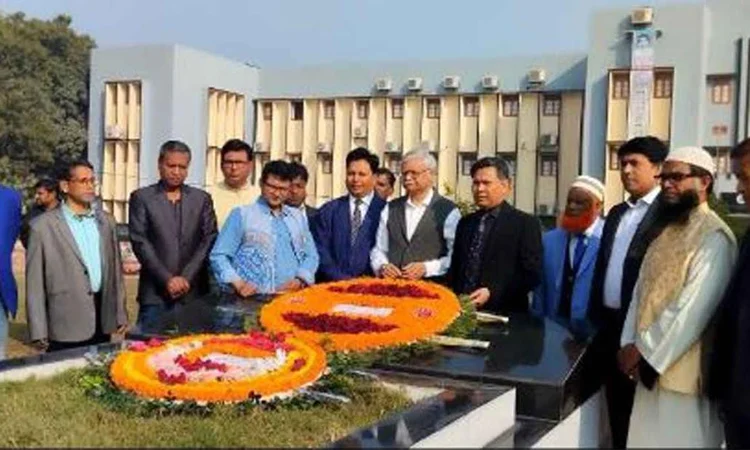
At Rajshahi University, his memory endures. February 18 is observed as “Zoha Day,” honouring a teacher who chose students over safety. His name is etched into the narrative of Bangladesh’s liberation—not as a general or a politician, but as a professor who believed that knowledge must serve humanity.
RESET BUTTON: Yunus is replacing 1971 memorials with July monuments
Erasing the nation’s father: An assault on the 1971 Liberation War
Destruction of 1971 murals an example of Yunus’ pro-Pakistani agenda
Legacy In The Republic He Helped Shape
Independent Bangladesh was born in 1971 after immense sacrifice. In its story, the martyrs of 1969 occupy a foundational chapter. Dr. Shamsuzzoha stands among them as a symbol of moral leadership. His life reminds the nation that the defense of youth, dignity, and truth sometimes demands the highest price.
In the final measure, his legacy is not only in memorials or ceremonies. It is in every classroom where teachers see students not as subjects to manage but as futures to safeguard. It is in every citizen who understands that the freedom of a nation is often secured by those who, in a decisive moment, step forward and refuse to step aside.
Dr. Shamsuzzoha’s body fell at Kazla–Motihar Gate.
His courage did not.
Dr. Mohsin Ali: New York-based author of 35 English and 15 Bengali books. This writer was an eyewitness to this tragic incident. He participated in this students’ procession to protest the Pakistani oppressions against the Bengalees, as a student of Rajshahi College, Rajshahi, Bangladesh.
 Bengali
  English