Dozens of protesters, primarily from the Bangladeshi diaspora and supported by human rights activists, gathered outside the Bangladesh High Commission in London’s Queens Gate area on Saturday, forming a human chain to condemn ongoing violence, arson, rape, and extremist mob attacks against minorities in Bangladesh.
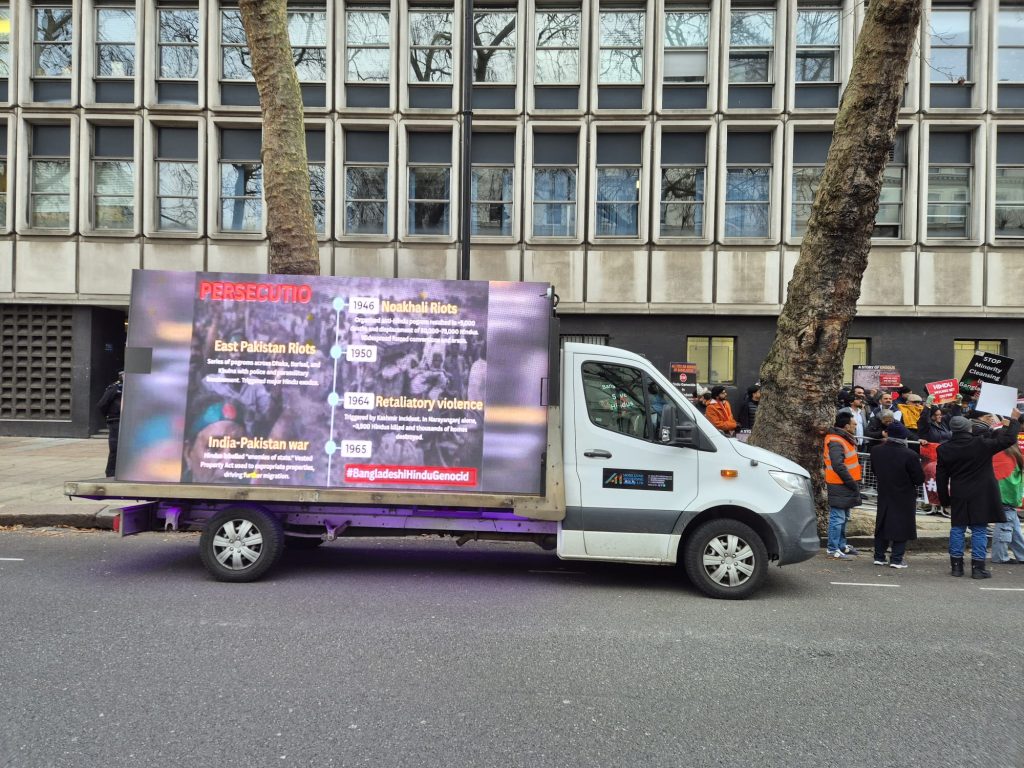
Organised by the Bangladesh Hindu Association alongside various human rights groups and free speech advocates, the demonstration highlighted the targeted persecution of Hindus and called for the resignation of the so-called Nobel Peace Prize laureate-turned-mob king Dr. Muhammad Yunus as the chief adviser.
Over 200 participants waved Bangladeshi flags, held posters and banners, and chanted slogans denouncing recent atrocities. Speakers accused the interim government of failing to control law and order and protect minorities, particularly Hindus, who they claim are facing planned violence.
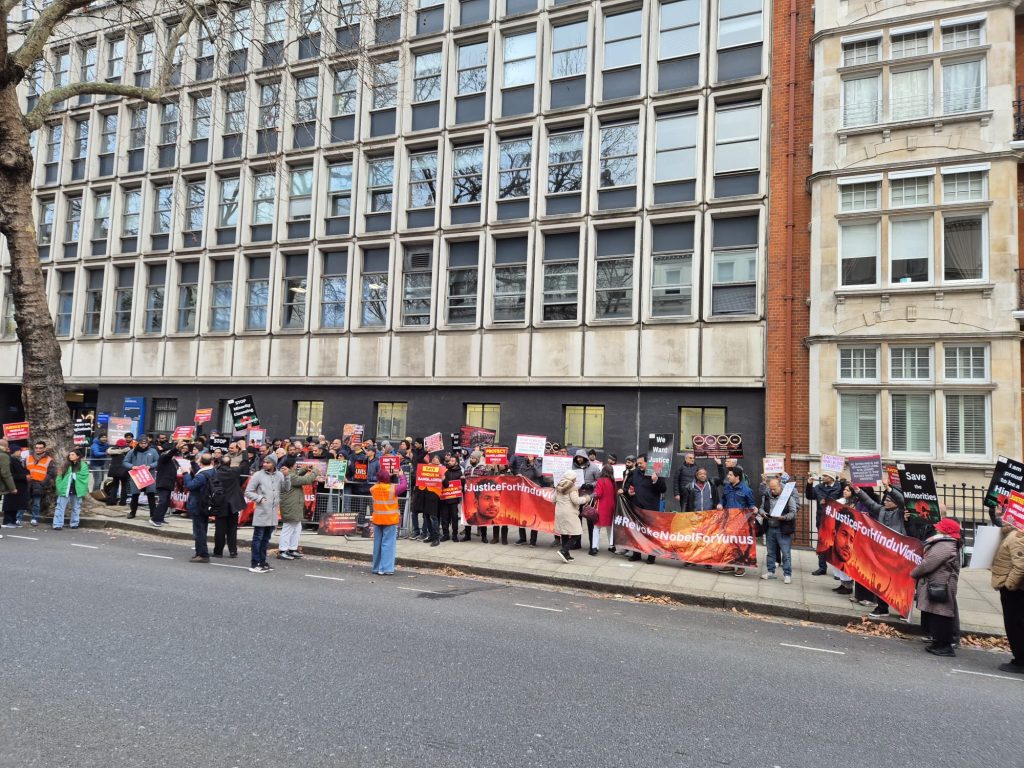
A focal point of the protest was the brutal killing of Dipu Chandra Das, a Hindu youth lynched by an extremist mob in Mymensingh over alleged blasphemy accusations. Protesters described the incident as a gross violation of human rights, where Das was beaten mercilessly, and his body subsequently burned. They demanded swift justice and prosecution of the perpetrators.
Sheikh Hasina calls for united resistance against illegal regime, mobocracy
Pankaj Saran critiques anti-India narrative and Islamist rise under Yunus
Yunus-aide Shahidul censured as he blames Sheikh Hasina for burning Dipu Das
The demonstration also strongly called for the immediate and unconditional release of Hindu monk Prabhu Chinmoy Krishna Das (also known as Chinmoy Krishna Das Brahmachari), arrested in Chittagong. Speakers labelled the charges against him as baseless and politically motivated.
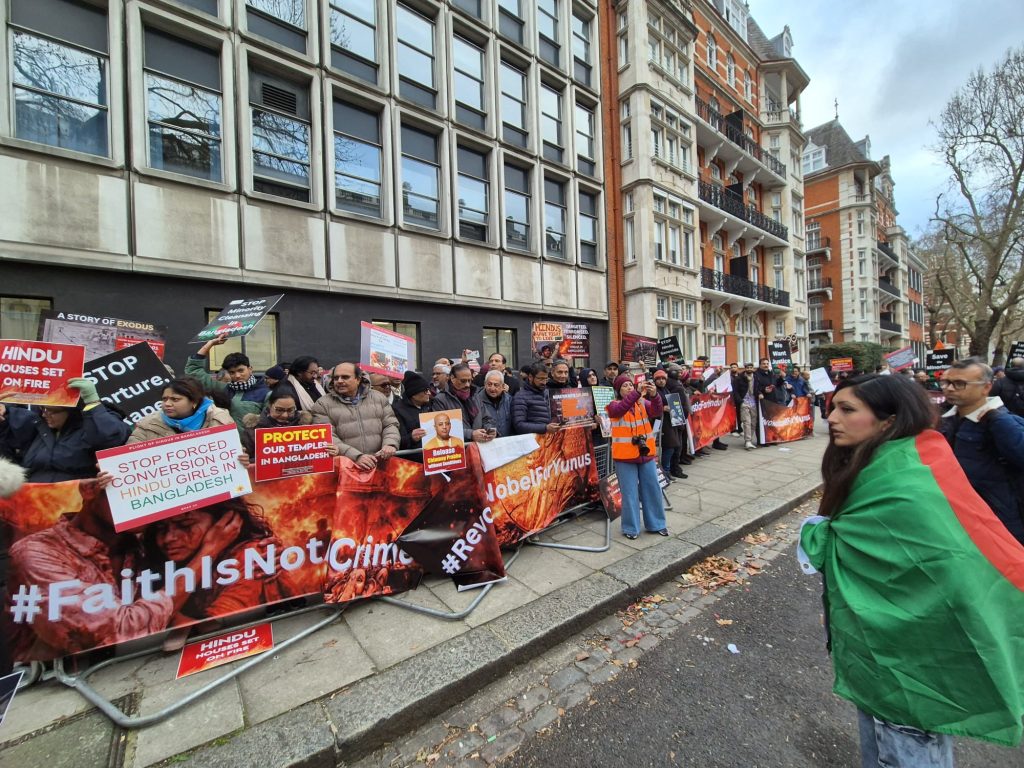
Protesters levelled severe criticism at the Jamaat-controlled Yunus-led interim administration, accusing it of incompetence in maintaining security and safeguarding minorities amid a surge in extremist activities. In a direct challenge, demonstrators demanded Yunus’s resignation, arguing that the government has failed to curb radical elements and ensure basic protection for vulnerable communities.
The event concluded with an appeal to the international community, the UK government, and global human rights organisations to closely monitor the situation in Bangladesh and take effective measures to secure justice and safety for minorities.
This London protest echoes similar demonstrations worldwide, including in India and within Bangladesh itself, where minority groups have voiced alarm over more than 2,900 documented incidents of violence since the interim government’s formation. Human rights reports and independent sources have highlighted killings, arsons, and land grabs, fueling calls for accountability amid Bangladesh’s political transition ahead of the February 12 elections.
 Bengali
  English