BNP Secretary General Mirza Fakhrul Islam Alamgir has drawn sharp criticism for falsely claiming that the razakars of Jamaat-e-Islami Muhammad Kamaruzzaman and Mir Quasem Ali, along with BNP’s Salahuddin Quader Chowdhury, were unjustly executed for “false” charges of crimes against humanity committed during the 1971 Liberation War.
His remarks, made at a Jamaat-organised event, have been condemned as a dangerous distortion of history, while Jamaat chief Dr. Shafiqur Rahman’s recent “unconditional apology” for the party’s actions since 1947 is being criticised as a calculated manoeuvre to deflect accountability for its role in the war.
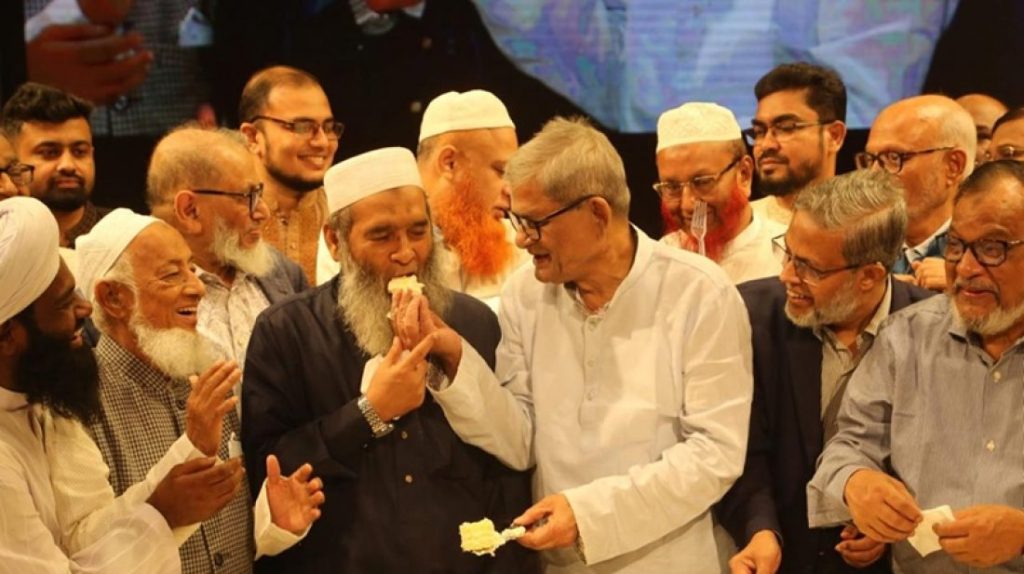
Speaking at a program marking the founding anniversary of the Jamaat-affiliated daily Naya Diganta at Shilpakala Academy on Saturday, Mirza Fakhrul alleged that Kamaruzzaman, Mir Quasem Ali—founder of the newspaper—and Salahuddin Quader Chowdhury were victims of fabricated charges during the Awami League’s tenure.
He claimed that the trio, convicted for heinous war crimes including genocide and torture, were unjustly sentenced to death. Fakhrul further alleged that 20,000 BNP members were killed and 1,700, including former leader Ilyas Ali, disappeared between 2009 and 2024 under Awami League rule.
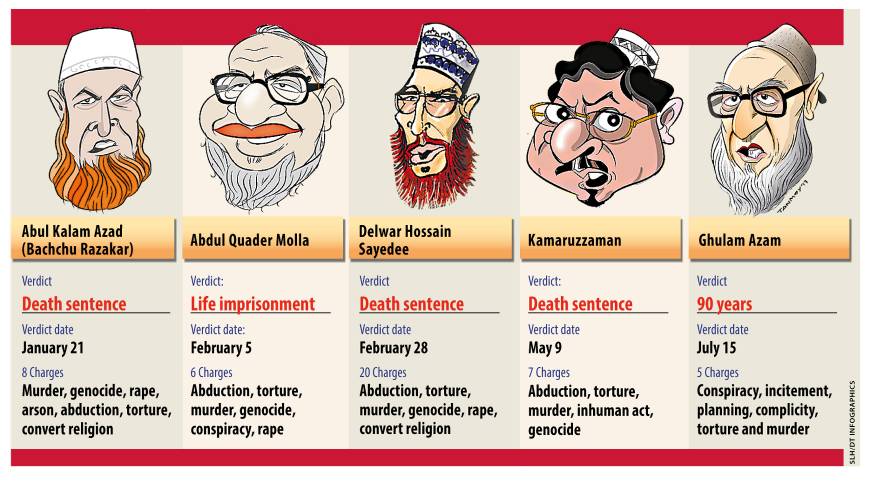
These claims have been widely debunked as baseless and inflammatory, with critics accusing Fakhrul of whitewashing Jamaat’s and his party’s ties to war criminals to curry favour with the Islamist group. The International Crimes Tribunal, established to try the 1971 atrocities, convicted Kamaruzzaman, Mir Quasem, and Chowdhury based on extensive evidence, including survivor testimonies and documented collaboration with Pakistani forces.
Abdun Noor Tushar concerned over Jamaat’s influence, election integrity
Anis Alamgir: Jamaat’s apology a trick to evade accountability for 1971 genocide
Advocate Fazlur Rahman: Yunus is the new dictator, patronising Jamaat, NCP
Fakhrul’s remarks, made in a Jamaat stronghold, are seen as a reckless attempt to rewrite history and align BNP with anti-liberation forces, undermining Bangladesh’s collective memory of the Liberation War.
“Mirza Fakhrul’s lies are a disgrace to the sacrifices of 1971,” said a political analyst, speaking anonymously due to security concerns. “Calling these convictions ‘false’ insults the millions who suffered and emboldens those who seek to erase Jamaat’s bloody legacy.”
Jamaat Chief’s Apology: A Tactical Dodge
Fakhrul’s statements came days after Jamaat-e-Islami Ameer Dr. Shafiqur Rahman issued a broad apology in New York on October 22, 2025, for “all suffering caused by Jamaat from 1947 until 8:11pm, to whomever, wherever.” The apology, repeated multiple times by Rahman and predecessors like Ghulam Azam and Motiur Rahman Nizami, has been met with scepticism and labelled a tactical ploy to sanitise Jamaat’s image ahead of the 2026 elections.
Only an inclusive election could stabilize Bangladesh, Sajeeb Wazed tells AP
GM Quader takes the centre stage to censure Yunus gang over election concerns
6 international human rights groups urge Yunus to bolster protections
Rahman’s remarks, delivered at a public event, avoided direct mention of 1971, when Jamaat actively opposed Bangladesh’s independence and its paramilitary wings—Al-Badr, Al-Shams, and Razakars—orchestrated mass killings, rapes, and intellectual assassinations alongside Pakistani forces. “Have we made mistakes only in 1971? Are those demanding apologies, angels?” Rahman deflected, arguing that focusing on past wrongs divides the nation. He claimed Jamaat’s “99 out of 100 decisions” were correct, framing any errors as minor human oversights.
Critics have slammed this as a calculated move to sidestep accountability for Jamaat’s role in the genocide that claimed millions of lives. “This is not an apology—it’s a political stunt,” said a Dhaka-based historian. “By lumping 1971 with vague references to 1947, Rahman trivialises the Liberation War’s atrocities. It’s a cynical tactic to gain public sympathy without admitting specific crimes.”
Rahman’s insistence on repeated apologies—citing his own, Ghulam Azam’s, and Nizami’s—while dismissing demands for a 1971-specific reckoning has further fueled outrage. “If they were sincere, they’d issue a formal party resolution admitting and atoning for their war crimes, not these ambiguous soundbites,” the historian added. The apology’s timing, amid Jamaat’s growing influence in the interim government’s orbit, raises fears of a concerted effort to rehabilitate the party’s image without addressing its anti-liberation legacy.
Election and Law Enforcement Concerns
The controversy unfolds against a backdrop of mounting concerns over the integrity of the upcoming February 2026 elections and deteriorating law and order. Fakhrul’s alignment with Jamaat at the Naya Diganta event signals a troubling BNP-Jamaat nexus, which critics fear could destabilise the electoral process. The interim government, led by Dr. Muhammad Yunus, faces accusations of bias toward Jamaat and NCP, with both parties enjoying privileged access to high-level talks despite their controversial histories.
Recent meetings between Yunus and BNP, Jamaat, and NCP revealed a shared grievance: alleged partiality by some advisory council members. However, the lack of named culprits has led to accusations of “smoke and mirrors” to pressure the government without accountability. Yunus’ reluctance to reform the council, coupled with his history of unilateral decision-making, has deepened distrust. “He listens but acts on his own terms,” Tushar noted, warning that this could undermine electoral fairness.
Law and order issues further complicate the scenario. Public protests by teachers, rural electricity workers, and Grameenphone employees are routinely ignored or branded as “fascist,” while NCP’s demands are met with leniency. Reports of NCP seizing properties under the guise of targeting “fascists” mirror the very tactics they condemn, raising fears of unchecked vigilantism. “One country, two laws,” Tushar remarked, criticizing the government’s double standards.
As Bangladesh approaches the polls, the spectre of Jamaat’s unaddressed past and BNP’s revisionist rhetoric threatens to erode democratic trust. Calls for urgent elections in January or February 2026 grow louder, with demands for a transparent, accountable government to replace the interim “circus.” The nation awaits clarity on whether Yunus will address these grievances or allow political opportunism to prevail, with the shadow of 1971 looming large.
 Bengali
  English