In a rare display of compassion amid one of South Asia’s most enduring political feuds, five-time Prime Minister and Awami League President Sheikh Hasina has voiced grave concern for the health of her longtime rival, BNP Chairperson Khaleda Zia, and offered prayers for her recovery.
The gesture comes as Sheikh Hasina, now in exile in India, reflects on a turbulent history marked by accusations, violence, and personal tragedies that have defined Bangladeshi politics for over four decades.
In an exclusive email interview with IANS published on Tuesday, Sheikh Hasina responded to questions about Khaleda Zia’s critical condition, as the Bangladesh Nationalist Party (BNP) leader is under heavy security in a Dhaka hospital.
“I am gravely concerned to hear that Begum Khaleda Zia is ill and will pray that she can make a recovery,” Hasina stated simply, avoiding any reference to their bitter past.
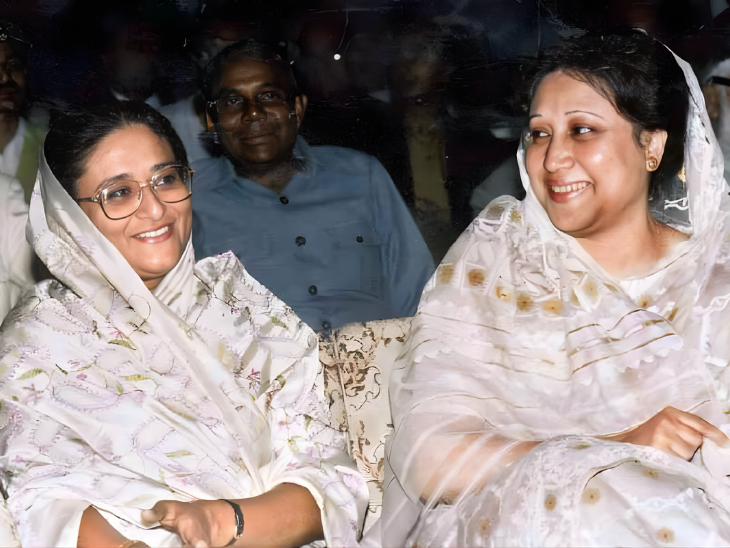
In 2015, following the death of Khaleda Zia’s younger son, Arafat Rahman Coco, from a heart attack in Malaysia, Sheikh Hasina attempted to visit Zia’s Gulshan office in Dhaka to offer condolences.
Khaleda Zia gets VVIP status and SSF protection as Tarique notices invisible threat
February 15 election: Khaleda Zia’s disgraceful record of rigging
Corruption: Why Khaleda’s family has proof, Sheikh Hasina’s does not
She was turned away at the gate, an incident that Sheikh Hasina later described as “insulting.” Khaleda Zia’s aides claimed she was asleep, but the snub highlighted the depths of their enmity. Earlier claims of curses or public laudations of misfortunes remain anecdotal, with Sheikh Hasina once remarking that Khaleda Zia’s alleged “curses” turned into blessings for Bangladesh.
Sheikh Hasina, 78, daughter of Bangladesh’s founding father Sheikh Mujibur Rahman, has long been celebrated for her role in steering the country toward economic growth during her 15-year tenure as prime minister, transforming Bangladesh from a struggling nation into one of Asia’s fastest-growing economies.
Under her leadership, GDP per capita tripled, poverty rates plummeted, and infrastructure boomed with projects like the Padma Bridge. However, her rule ended abruptly in August 2024 amid massive student-led protests over job quotas, leading to her ouster and flight to India. Recently, a Bangladeshi court sentenced her in absentia to death for alleged crimes against humanity during the 2024 crackdown, a verdict she has dismissed as “biased and politically motivated.”
Khaleda Zia, 80, widow of former President Ziaur Rahman and a three-time prime minister, has been a formidable opponent. Leading the BNP, she has championed conservative policies and alliances, but her terms were marred by allegations of corruption and fostering militancy.
She hailed Sheikh Hasina’s recent death sentence, with BNP leaders describing it as a step toward justice. Yet, her own health has deteriorated dramatically; she was released from house arrest following Hasina’s ouster but now faces critical illness, prompting sympathy even from adversaries.
Why Tarique Rahman still cannot come home after 17 years
Barisal BNP leader Sarfuddin admits to allowing extortion, bribing Khaleda Zia
The rivalry between Sheikh Hasina and Khaleda Zia has been punctuated by dramatic and often violent episodes. In 2004, during Zia’s premiership, a grenade attack targeted an Awami League rally led by Sheikh Hasina in Dhaka on August 21, killing 24 people and injuring over 500, including Hasina herself.
Sheikh Hasina and her supporters have long accused elements linked to the BNP, including Zia’s son Tarique Rahman, of orchestrating the assault with involvement from militant groups like Harkat-ul-Jihad-al-Islami (HuJI) and Jamaat-ul-Mujahideen Bangladesh (JMB). A 2018 court under Hasina’s government sentenced 19 to death, including figures associated with the BNP, but in December 2024, Bangladesh’s High Court acquitted all 49 previously convicted, citing flaws in the investigation.
Other allegations have flown both ways. Hasina has claimed that Khaleda Zia’s administration tolerated or enabled militant activities, including bomb plots by HuJI and JMB aimed at destabilising her opposition.
Khaleda Zia, in turn, has denied these charges, and her supporters point to Sheikh Hasina’s own controversial war crimes tribunal, established in 2010 to prosecute 1971 Liberation War collaborators, as a tool for political vengeance. The tribunal, which Sheikh Hasina promised during her 2008 campaign, led to the executions of several Jamaat-e-Islami leaders allied with the BNP.
 English
  Bengali