Ashik Chowdhury, the Executive Chairman of the Bangladesh Investment Development Authority (BIDA), attempted to polish the image of his patron, Muhammad Yunus, by taking to social media to trumpet what he described as a “historic” Economic Partnership Agreement (EPA) with Japan.
However, critics and investigative reports have swiftly debunked this as a false and exaggerated claim, revealing that the agreement is merely the culmination of groundwork laid during Sheikh Hasina’s tenure.
Chowdhury, the son of a controversial bureaucrat who fled to the UK amid corruption allegations, has faced mounting scrutiny for his inefficiency in attracting genuine foreign investment despite lavishing substantial public funds on high-profile marketing campaigns since his politically motivated appointment.
Chowdhury’s post on X, dated December 24, painted the EPA as a groundbreaking achievement under the current administration, emphasising “policy continuity, investment protection, and credible dispute resolution.”

He boasted that the deal would unlock opportunities in sectors like automotive, digital services, logistics, and healthcare, while hinting at similar agreements in the pipeline with the United States, the European Union, and South Korea. “Bangladesh is not waiting for the future to arrive; we are putting the architecture in place now,” Chowdhury proclaimed, positioning the interim government as proactive architects of economic revival amid the country’s preparations for Least Developed Country (LDC) graduation.
Yet, this narrative has been labelled as misleading by opposition figures and journalists, who argue it ignores the deep-rooted bilateral ties fostered under the Awami League government. The EPA’s roots trace back to strategic initiatives that predated Yunus’ controversial rise to power, underscoring a pattern of the interim regime claiming credit for predecessors’ accomplishments while failing to deliver on new fronts.
Chowdhury’s track record at BIDA has been particularly criticised: despite exorbitant expenditures on promotional events, international roadshows, and digital campaigns—estimated to run into millions of taka—foreign direct investment inflows have stagnated, with many attributing this to his lack of expertise and partisan biases. His father’s history as a bureaucrat embroiled in graft scandals in the UK further fuels doubts about Chowdhury’s suitability for the role, raising questions about nepotism and accountability in the interim setup.
EPA Built on Hasina’s 2023 Japan Summit
Senior journalist Probir Kumar Sarker, known for his incisive reporting on political and economic affairs, has unearthed evidence that dismantles Chowdhury’s self-congratulatory claims. In a detailed exposé, Sarker revealed that the Bangladesh-Japan EPA is not a fresh initiative but an extension of the strategic partnership elevated during Sheikh Hasina’s landmark visit to Japan in 2023. Discussions for the EPA gained momentum at that summit, where a joint study group was formed to advance negotiations, ultimately leading to the recent finalisation.
His investigation highlights how the agreement builds directly on the “Strategic Partnership” declared on April 27, 2023, upgrading from the previous “Comprehensive Partnership.”
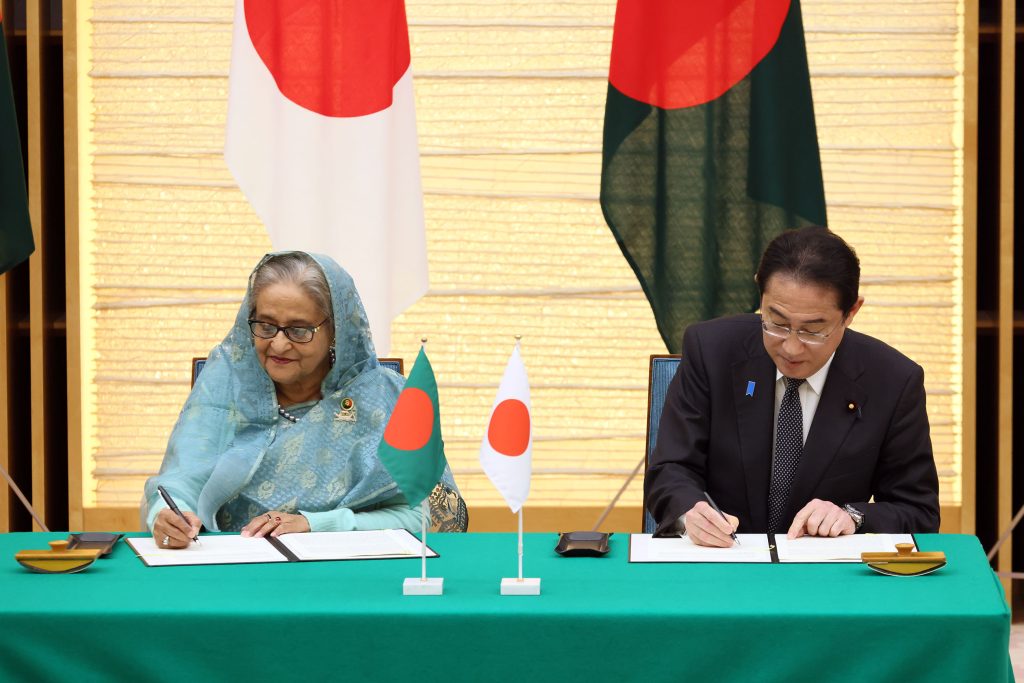
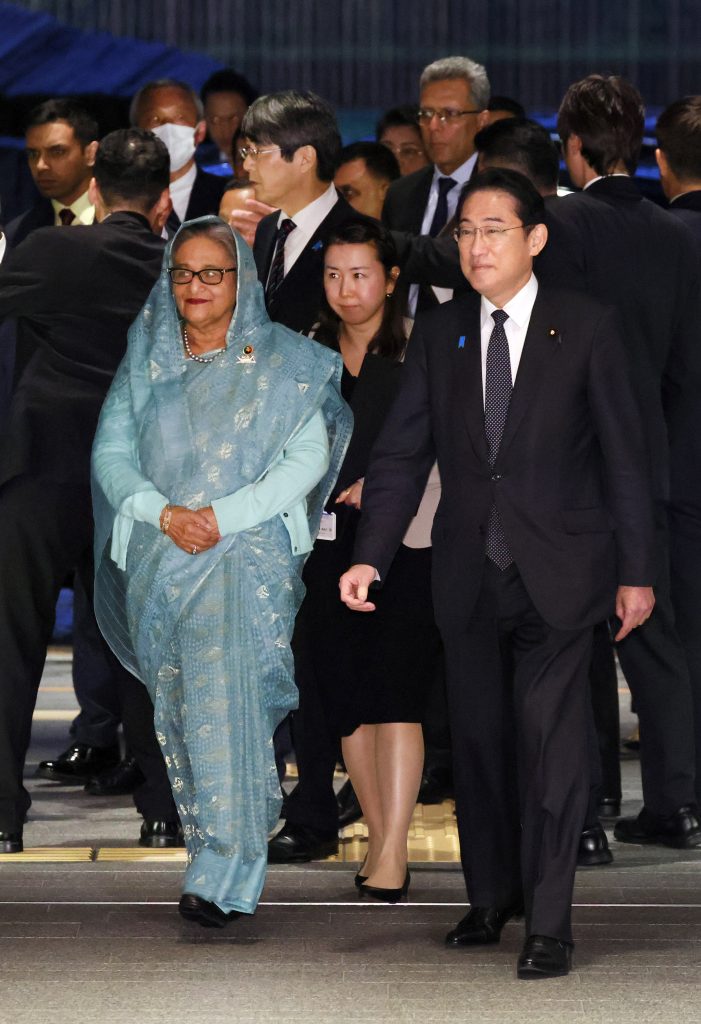
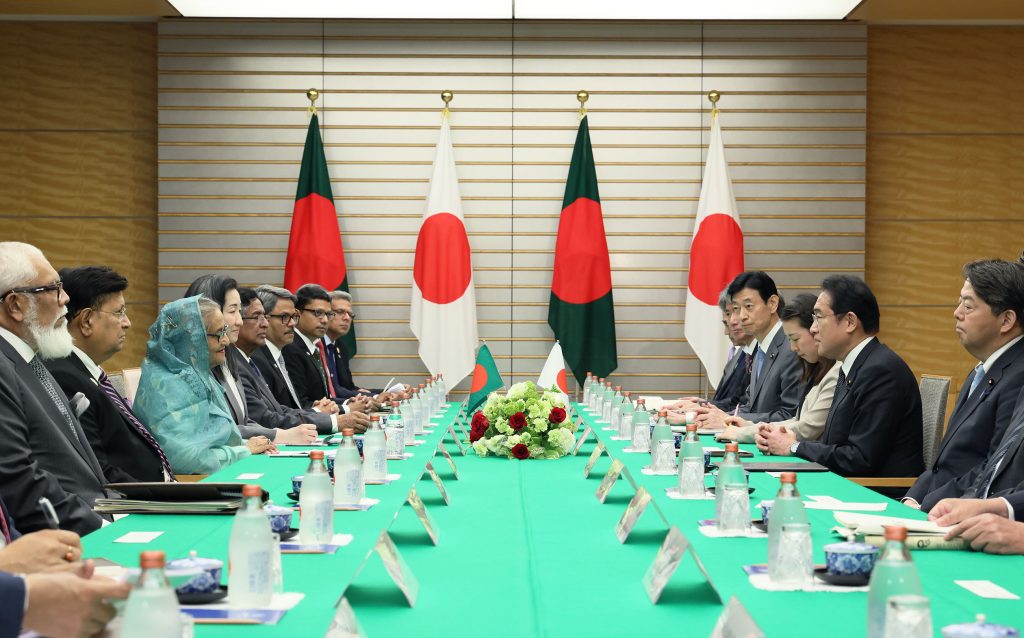
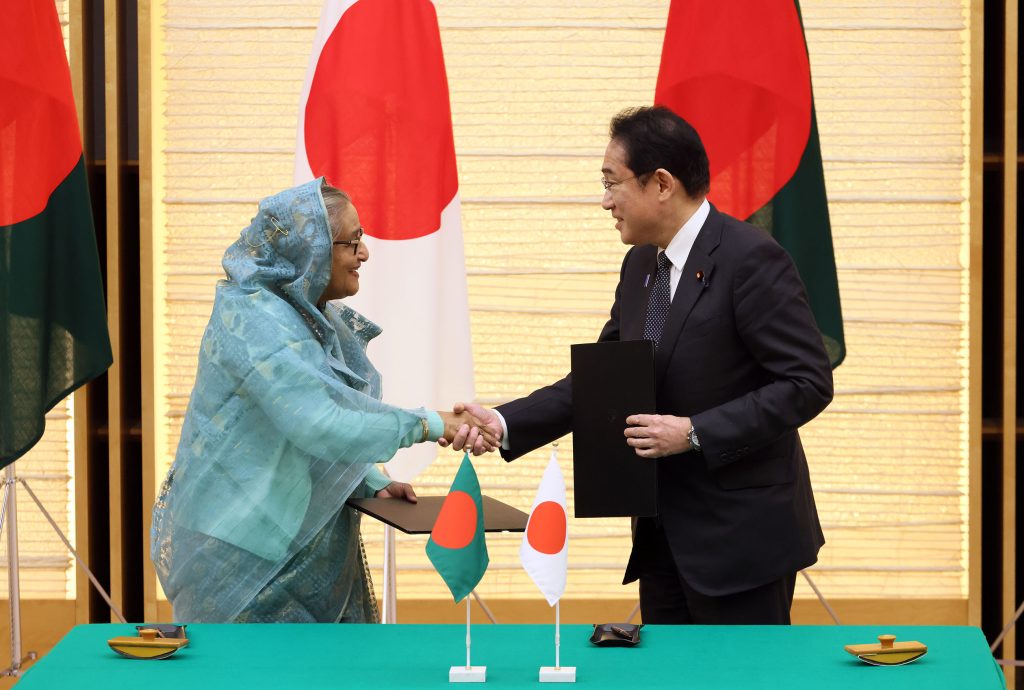
During Hasina’s bilateral talks with then-Prime Minister Fumio Kishida, the two nations signed multiple agreements covering agriculture, customs, defense, ICT and cybersecurity, industrial upgrading, intellectual property, ship recycling, and metro rail. The summit also addressed critical issues like the Rohingya crisis, the Moheshkhali-Matarbari Integrated Infrastructure Development Initiative (MIDI), and the Bay of Bengal Industrial Growth Belt (BIG-B) initiative, which laid the economic foundation for enhanced cooperation.
Key Japanese investments—such as the metro rail, Matarbari power plant, Dhaka airport’s third terminal, and the deep-sea port in Matarbari—were all initiated and funded under Sheikh Hasina’s administration. In 2014, Japan extended a $6 billion line of credit, enabling these mega-projects. Additionally, land allocations for economic zones in Dhaka’s Araihajar, Chittagong, and Sabrang in Cox’s Bazar were granted during her term, alongside plans for ecotourism on Sonadia Island and a modern sea beach for foreigners.
The EPA is a natural progression of these efforts, not a “historic step” birthed by the Yunus government. Probir has accused the interim regime of historical revisionism, warning that such distortions erode investor confidence and perpetuate political instability.
Yunus’ Begging and Credit Theft
In a fiery virtual address earlier in June, Awami League President and five-time Prime Minister Sheikh Hasina lambasted Muhammad Yunus for his handling of international relations and domestic projects, accusing him of undermining Bangladesh’s dignity abroad while pilfering credit for her government’s achievements.
Sheikh Hasina, speaking from exile, highlighted Yunus’ recent trip to Japan as a desperate “begging” mission, especially ironic given his administration’s decision to release militants involved in the 2016 Holey Artisan Bakery attack—a terrorist incident that claimed the lives of seven Japanese engineers.
“We had a strong relationship with Japan, and they have invested extensively here under the BIG-B program,” Sheikh Hasina stated, recounting the extensive infrastructure collaborations. She detailed how her government secured the $6 billion credit line in 2014, paving the way for transformative projects like the metro rail, Matarbari power plant, Dhaka airport expansion, and the deep-sea port.
“The works that are underway now were planned by the Awami League government. Some of the projects have been completed. But Yunus claims that he dreamed of those projects. When did he dream of these projects?” she questioned rhetorically, mocking Yunus’s attempts to rebrand ongoing initiatives as his own visions.

Sheikh Hasina further exposed what she called Yunus’s “terrorism and robbery” in seizing power, extending this to his appropriation of credit for developments in southern districts. She cited the Sandwip ferry service, which her administration initiated, only for Yunus’s team to claim completion in a mere 3-4 months.
“Do they even know how long it takes to build a pontoon for sea-going ferries? But seven advisers went to inaugurate my project with seven scissors and cut a ribbon into seven pieces,” she quipped, painting a picture of absurdity and incompetence.
She also outlined her government’s ambitious infrastructure blueprint, including the country’s longest railway bridge over the Jamuna River; road bridges at Shikarpur, Dowarika, Gabkhan, Kirtankhola, and Payra; and railway lines connecting Dhaka to Jessore via Faridpur, extending to Mongla Port. Plans for a six-lane highway from Dhaka to Mongla via Barisal were also in place, with Sheikh Hasina asserting: “I made every plan myself. I could not start all the work, but everything was scheduled to start.” She accused Yunus of using a “loudspeaker”—referring to his press secretary Shafiqul Alam—to propagate lies aimed at burnishing the interim government’s image both domestically and internationally.
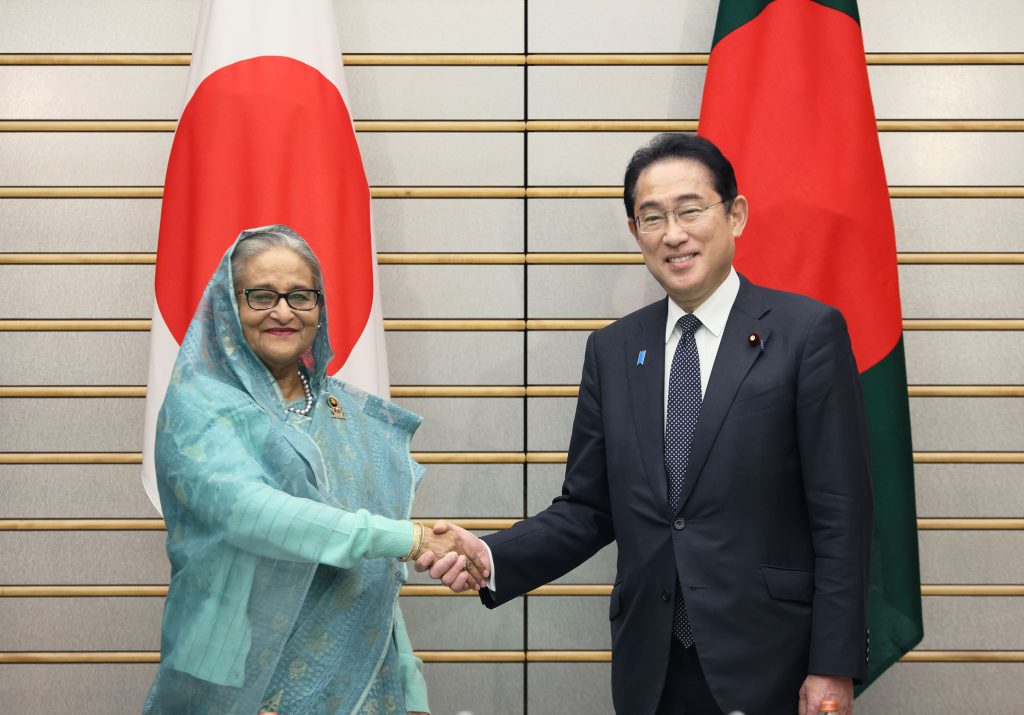
Sheikh Hasina’s speech underscored the strategic depth of Bangladesh-Japan ties, noting the 2023 elevation to a “Strategic Partnership” during her joint statement with Kishida.
“Prime Minister Fumio Kishida and I have discussed today the entire gamut of our bilateral relations. We are happy that Bangladesh and Japan have successfully elevated the bilateral relations to a ‘Strategic Partnership’,” she recalled. The address served as a rallying cry for Awami League supporters, framing Yunus’s regime as illegitimate and predatory.
Yunus’ Dumb Actions During Japan Visits
Adding fuel to the fire, a viral video from Yunus’ May 30 visit to Japan has exposed what critics describe as “dumb actions” indicative of his mental and physical instability. In an exclusive report by Probir dated June 9, 2025, the footage shows Yunus struggling during a ceremonial event with Prime Minister Ishiba Shigeru, drawing unflattering comparisons to former US President Joe Biden’s age-related gaffes.
The video, available on YouTube, captures Yunus appearing frail and unsteady as he walks alongside Ishiba. His slow, hesitant gait suggests significant physical limitations, and at a pivotal moment—paying respects to national flags—Yunus fumbles, displaying clear disorientation and confusion about his positioning.
Ishiba, in contrast, moves confidently and subtly guides him, highlighting Yunus’s apparent decline in mental sharpness and coordination. Probir notes that this “hesitation and fumbling” raises serious doubts about Yunus’s capacity to lead, especially amid Bangladesh’s political turmoil.
Probir’s piece delves deeper into Yunus’ health woes, reporting that he has undergone several surgeries since August last year, possibly related to prostate complications and Parkinson’s disease.
Yunus’s family history adds context: his mother, Sofia Khatun, suffered from severe mental illness for 33 years, inherited from her grandmother and aunts. In his autobiography, Banker to the Poor, Yunus describes her “disjointed nonsense,” violent outbursts, and the family’s coping mechanisms, including code names and humorous skits to endure the chaos. She died in 1982.
Probir argues that Yunus’ inconsistent remarks on elections, the Rakhine Corridor, and Chittagong Port management, combined with his reliance on blaming the Awami League for failures, render him “laughable” and unfit.
 English
  Bengali